REVIEW · SAN FRANCISCO
Woodside: Filoli Historic House and Garden Entry Ticket
Book on GetYourGuide →Operated by Filoli Center · Bookable on GetYourGuide
A quiet estate near San Francisco surprises people. Filoli Historic House and Garden in Woodside spreads across 654 acres, with a 16-acre garden that changes with the seasons. It’s a great day-trip mix: formal design, wild California nature, and short guided talks that help you notice what you’d otherwise skip.
I especially love the historic house museum angle. You get that early 20th-century feeling without it being a stuffy lecture—more like stepping into someone’s carefully curated world. I also like the garden-and-trail combo: Renaissance garden paths plus estate nature trails with six different ecosystems to pick through at your own pace.
One consideration: this is a “walk-it-all” outing. If you hate uneven paths or long strolls, you’ll feel it. Also, food and drinks aren’t included, so plan for snacks or budgeting for onsite options like the Vegetable Garden Bar.
In This Review
- Key things that make Filoli special
- Entering Filoli: your day starts at the main parking lot
- Price and value: what $36 really includes
- Planning your route: house first, then gardens, then trails
- The historic house museum: early 1900s glamour with real atmosphere
- 16-acre gardens: English Renaissance design that changes with the season
- Georgian terraces meet Renaissance-style contrast
- Estate Trail: walk through six California ecosystems on one ticket
- Daily talks (about 15 minutes): what you’ll hear depends on the day
- Vegetable Garden Bar: a seasonal pause during spring blooms
- What to bring (and what to avoid) so your day stays smooth
- Seasonal strategy: tulips in spring, lights in winter
- Who this fits best (and who might feel underwhelmed)
- Should you book Filoli Historic House and Garden?
- FAQ
- How much is the Filoli Historic House and Garden entry ticket?
- How long is the ticket valid?
- Where do I check in?
- What does the ticket include?
- Are workshops or special programs included?
- Is food or drinks included with admission?
- How long are the guided talks?
- Are the talks in English?
- Is Filoli wheelchair accessible?
- What items are not allowed on site?
Key things that make Filoli special
- Historic house + house-style gardens in one entry ticket, not separate tours
- 16 acres of English Renaissance garden with seasonal blooms that shift through the year
- Six California ecosystems via estate trails, so it’s not just pretty landscaping
- Georgian revival terraces vs Renaissance-style garden contrast, easy to spot as you walk
- Daily guided talks (about 15 minutes) that can focus on architecture, roses, or bulbs
- Vegetable Garden Bar as a nice seasonal break during spring blooms
Entering Filoli: your day starts at the main parking lot
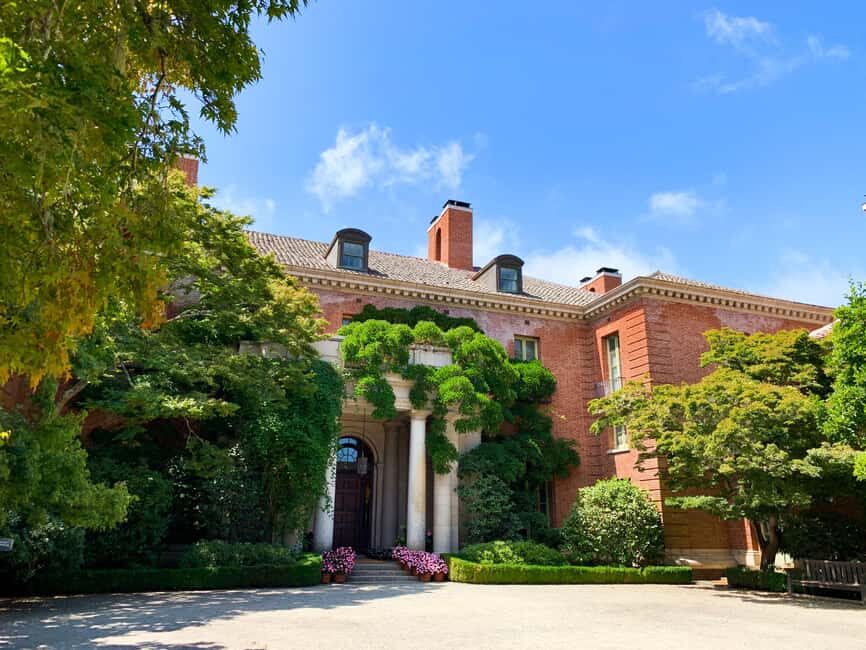
Your day begins at the check-in kiosks by the main parking lot. This matters because it sets the tone: you’re not wandering a big city maze. You’re stepping right into an estate experience, where signage and paths guide you from space to space.
Once you’ve checked in, you can shape the order yourself. I like that because Filoli is the kind of place where you might want to start with the house (to get context), or start with the gardens (to get the best light and mood first). With a day-valid ticket, you’re not forced into a tight schedule.
Before you go, I’d wear shoes you trust. Filoli is outdoors for long stretches, with garden paths and estate-trail walking. Bring comfortable shoes and give your feet priority. You’ll thank yourself later.
You can also read our reviews of more tours and experiences in San Francisco



Price and value: what $36 really includes
The ticket is $36 per person, and it’s valid for 1 day (times depend on availability). For that price, you’re getting a lot more than a quick garden stop.
Included access covers:
- House (historic house museum experience)
- Gardens (including the formal garden areas)
- Clock Tower Shop
- Estate Trail
- Daily talks
What’s not included:
- Workshops and special programs
- Food and drinks
Here’s how I think about the value. If you’re doing Filoli as a San Francisco area day trip, you’re paying for a full-property experience: design + history + nature trails. You’re also getting help understanding what you’re seeing through daily talks. That combo is where the ticket feels fair.
Also, food not being included is common for places like this. Just don’t plan on the ticket covering meals. If you want a drink during seasonal blooms, you’ll likely need to pay for it separately—like at the Vegetable Garden Bar, which is specifically called out as part of the seasonal experience.
Planning your route: house first, then gardens, then trails

Filoli works best when you give yourself a logical flow. I’d try this order:
1) Historic house museum for context
2) Formal and Renaissance-style garden for the visual design payoff
3) Estate Trail when you want variety and a slower, nature-focused stroll
Starting with the house helps you understand the setting. The mansion and its surrounding spaces are meant to be viewed as a whole. Then, as you walk the gardens, you’ll notice the design choices more clearly—especially the contrast between Georgian-style terraces and the Renaissance-style garden layout.
And once you’ve done the curated part, the estate trails bring a different rhythm. Instead of every path being “designed to impress,” it becomes “walk and observe.” That’s where the six ecosystems idea feels real, not just a marketing line.
The historic house museum: early 1900s glamour with real atmosphere
The historic house is the heart of the time-travel feeling here. Filoli is known for its lavish early 20th-century mansion vibe, and walking through it gives you a strong sense of how people lived and hosted at that time.
What I like about the house experience is that it’s not isolated. You’re not just looking at rooms and then leaving. The house connects directly to what you’ll see outside—terraces, garden lines, sightlines, and the broader layout of the estate.
Practical tip: treat the house like your “anchor.” Even if you end up spending longer outside later, the house helps you understand what the garden design was supporting. If you skip the house first, you might still enjoy the gardens—but you’ll miss some of the meaning behind the structure.
16-acre gardens: English Renaissance design that changes with the season
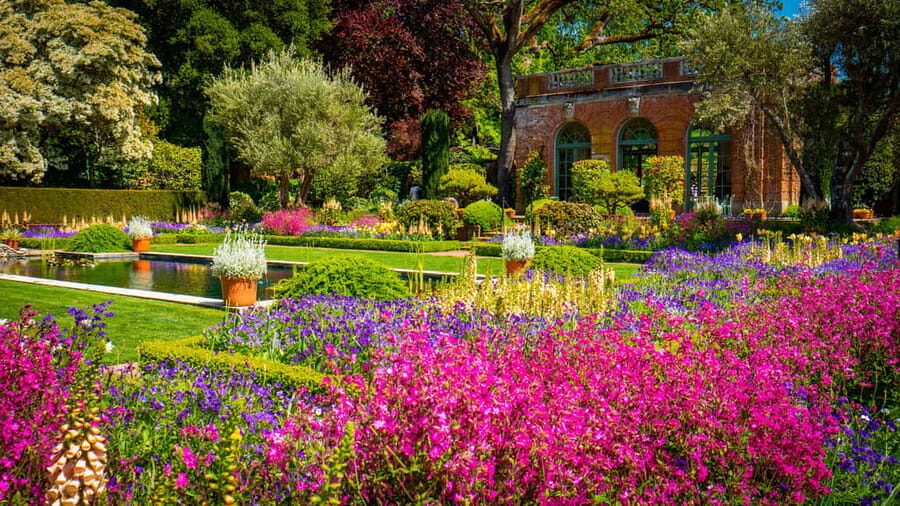
The gardens are the main draw, and the scale is easy to appreciate once you’re there. You’re exploring about 16 acres, with seasonal displays and new blooms that make each visit feel different.
A few garden-style elements you can look for as you walk:
- Seasonal flower displays, including the big spring show known for tulips
- Formal garden structure where paths, terraces, and planting create visual rhythm
- Opportunities to pause, especially when the day’s scheduled talk is nearby
One of the best ways to use a garden like this is to slow down for “pattern spotting.” For example, as you move between garden sections, you’ll start seeing how the design uses contrast—edges against open space, straight lines against softer planting areas, and structured terraces giving way to more garden-like curves.
If you’re visiting in winter, keep in mind Filoli also has miles of glittering lights during the season when lights are on. If you’re visiting in spring, plan your visit around the fact that Filoli goes heavy on tulips, with tens of thousands called out for the spring season.
You can also read our reviews of more historical tours in San Francisco






Georgian terraces meet Renaissance-style contrast
One of the easiest things to appreciate at Filoli is the design contrast. You get Georgian-style terraces on one side of the storytelling and a Renaissance-style garden on the other.
Why that’s valuable for you: it’s a living lesson in garden design. You’re not reading about it—you’re walking it. If you like architecture, landscaping, or “why this place looks the way it does,” this contrast gives you something to actually observe step-by-step.
As you go, watch how terraces shape movement. Terraces tend to force viewpoint changes and create a sense of “ordered looking.” Then you move into garden-style space where the emphasis shifts to planting and layered textures. That back-and-forth keeps the experience from turning into a repetitive stroll.
Estate Trail: walk through six California ecosystems on one ticket

After the house and the garden, the Estate Trail is where Filoli expands your day beyond landscaping. This is the “nature with training wheels” part—still on an estate, but with a clear push toward exploring real California ecosystems.
The estate trails are described as showcasing six different ecosystems. That’s a big claim, and the reason it matters is variety. Even if you’re not an expert, you’ll likely notice differences in plant feel, color, and the overall vibe of each trail section.
I recommend saving the trail for after you’ve gotten your design fix. Once you’re done admiring the mansion and formal areas, the trail becomes a mental reset. It’s also where the property’s 654 acres starts to feel like more than just a number.
If you only have energy for one “type” of walking, prioritize the gardens first. But if you want a day that includes both calm garden strolling and more change-of-scenery nature walking, the Estate Trail is the piece that rounds the visit out.
Daily talks (about 15 minutes): what you’ll hear depends on the day

Filoli includes daily talks, and they’re short—around 15 minutes. That’s a sweet spot. Long enough to give you context, short enough that you’re not trapped away from the rest of the grounds.
What’s smart is that talk topics vary by day and season. You might catch:
- an Architecture Talk
- a Rose Talk
- a Bulb Talk
Here’s how to use this as a visitor: pick the talk that matches what you’re most interested in right now. If you’re already deep in the house experience, an architecture-focused talk can connect rooms to outdoor design. If you’re there when roses or bulbs are in their peak moment, a themed talk gives you a better eye for scent, planting choices, and why certain varieties are highlighted.
Even if you don’t catch the perfect topic, the fact that talks happen daily means you aren’t stuck waiting for the one day you traveled to. You can often find a session that fits your route.
Vegetable Garden Bar: a seasonal pause during spring blooms
Filoli calls out the Vegetable Garden Bar in connection with spring blooms. That means it’s part of the seasonal rhythm of the grounds.
Since the ticket doesn’t include food or drinks, treat this as an optional break rather than a guaranteed included stop. But it’s still a good idea to budget for a drink here if you’re visiting during the spring bloom period. It gives you a place to slow down and recharge without leaving the estate.
What I like about a stop like this is that it turns the garden walk into a full experience. You’re not only looking—you’re taking a breath, enjoying the plant show, and then continuing on with fresher energy.
What to bring (and what to avoid) so your day stays smooth
Keep your planning simple:
Bring:
- Comfortable shoes
Don’t bring:
- Weapons or sharp objects
- Smoking
- Drones
- Pets (assistance dogs are allowed)
- Vaping
- Bikes
- Alcohol and drugs
Those restrictions are worth noting because they affect how you move around the estate. No bikes and no drones mean the property stays quieter and more visitor-friendly, which is part of why Filoli feels like an oasis away from traffic noise.
A practical tip: dress for walking outdoors. Even if the weather looks fine when you arrive, garden shade and trail paths can shift your comfort level during the day.
Seasonal strategy: tulips in spring, lights in winter
Filoli is clearly designed to be revisited across seasons. The highlights point to two especially strong seasonal draws:
- Spring: tulips take center stage, with tens of thousands of blooms. This is also when the Vegetable Garden Bar is tied to the spring experience.
- Winter: there are miles of glittering lights, which turns the estate into a night-and-evening mood (when lights are on).
If you’re choosing one trip date, think about what kind of magic you want. Flowers are visual and sensory in a daytime way. Lights are atmosphere and path-walking at night.
If you enjoy photography, plan around when you’ll most enjoy walking. Gardens and estate trails are still your core experience either way—you’re just changing the “lighting soundtrack” of the day.
Who this fits best (and who might feel underwhelmed)
Filoli works especially well if you like at least two of these:
- gardens and landscape design
- historic house interiors and early 1900s style
- easy-to-navigate nature trails
- short guided explanations that help you see more
It’s also a strong choice for a San Francisco area day trip. You’re about 30 miles south of San Francisco, so you’re not committing to a multi-day plan just to see something meaningful.
This is less ideal if:
- you want food to be part of the ticket (food and drinks aren’t included)
- you dislike walking outside for long stretches
- you were hoping for only a quick “look and leave” stop
Should you book Filoli Historic House and Garden?
I’d book it if you want a single ticket that gives you three different experiences in one day: a historic mansion, a large formal garden, and nature trails through multiple ecosystems. The daily short talks are a bonus because they help you connect what you’re seeing to something more than just pretty scenery.
Skip booking only if walking outdoors is a deal-breaker for you, or if you don’t want to think about food/drinks separately. If you’re okay with comfortable shoes and a self-paced day, Filoli is a strong value at $36—especially for a Woodside estate that pairs design and nature without making you choose one.
If you’re planning around spring blooms or winter lights, you’ll get even more out of the visit because the grounds are meant to shift with the season.
FAQ
How much is the Filoli Historic House and Garden entry ticket?
The price is listed as $36 per person.
How long is the ticket valid?
The ticket is valid for 1 day. Starting times depend on availability.
Where do I check in?
Check in at the check-in kiosks by the main parking lot.
What does the ticket include?
General admission includes access to the House, Gardens, Clock Tower Shop, Estate Trail, and daily talks.
Are workshops or special programs included?
No. Workshops and special programs are not included.
Is food or drinks included with admission?
No. Food and drinks are not included.
How long are the guided talks?
The guided talks are about 15 minutes.
Are the talks in English?
Yes. The host or greeter is listed as English.
Is Filoli wheelchair accessible?
Yes. It is listed as wheelchair accessible.
What items are not allowed on site?
The listing says weapons or sharp objects, smoking, drones, pets (assistance dogs allowed), vaping, bikes, and alcohol and drugs are not allowed.