REVIEW · SAN FRANCISCO
San Francisco Technology and History Tour: South of Market
Book on GetYourGuide →Operated by Heck Wes Tours · Bookable on GetYourGuide
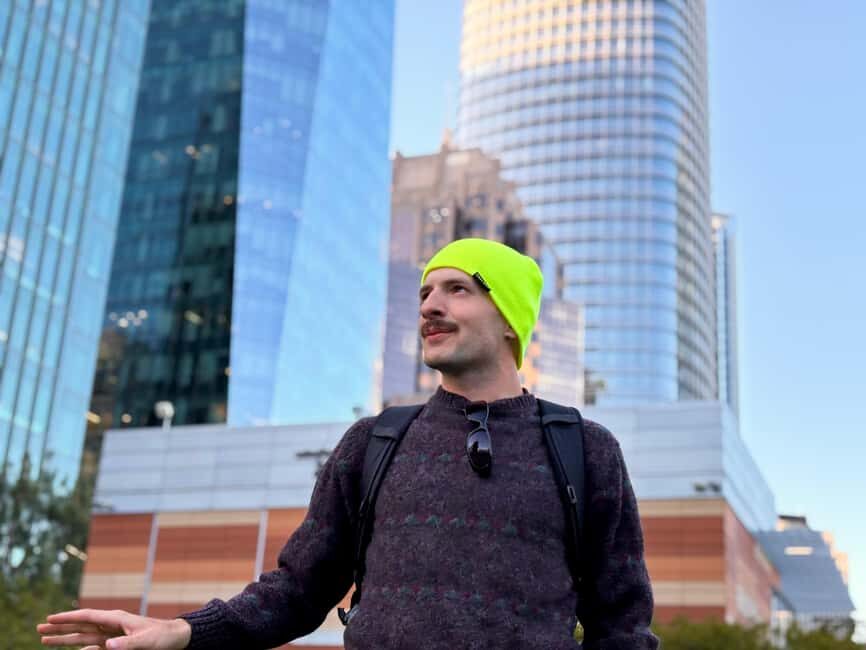
SoMa can change your map of San Francisco fast. This 70-minute walk ties startup legend to industrial work, then ends on a rooftop garden with skyline views.
I especially like how the route compresses multiple eras—South Park’s evolution from a British-style square to modern tech—and still keeps you moving on mostly flat ground. I also like that the guide, Wes, connects the big ideas to real neighborhood details, including comparisons with historical photos. One thing to consider: the tour spends about 10–15 minutes in South Park before you continue north, so if you want to linger longer in one spot, plan to explore nearby afterward.
In This Review
- Key Takeaways Before You Go
- Why This South of Market Walk Feels Like Two Cities
- South Park: Venture Capital’s British Square Origins
- 2nd Street: Shipping Power and the Flattened Hill That Made Room
- Folsom Street: A Side Street With Big Cultural Weight
- Yerba Buena Gardens: The Human Cost Behind Urban Renewal
- Salesforce Park and the Rooftop View Over Tar Flat
- California High Speed Rail: A Future Thread Through the Present
- Walking Practicalities: Shoes, Shade, and a Mostly Flat Route
- Price and Value: Getting Big Ideas for $30
- Who Should Book This Tour (and Who Might Skip It)
- Getting There and Leaving Smoothly
- Should You Book the San Francisco Technology and History Tour: South of Market?
- FAQ
- How long is the tour?
- What does it cost?
- Where does the tour start?
- Where does the tour end?
- Is the tour wheelchair accessible?
- Is South of Market an easy walk?
- What are the main stops on the route?
- What language is the tour guide?
- What should I wear or bring?
- Can I cancel for a full refund?
Key Takeaways Before You Go
- South Park’s many lives: British-style planning, gold rush encampments, post-1906 refugee life, Japanese community days, industrial work, and today’s venture capital scene.
- 2nd Street as a shipping artery: it linked downtown to the Pacific Mail Steamship Company docks and helped drive major land changes, including flattening a large hill.
- Urban renewal as a human story: Yerba Buena Gardens is framed through who was displaced and how that shifted SF politics.
- High Speed Rail in the mix: you’ll hear how California High Speed Rail points to where the region is headed next.
- A rooftop garden you can actually see the Bay from: Salesforce Park sits high above a former beachfront natural gas refinery site.
Why This South of Market Walk Feels Like Two Cities
South of Market is where San Francisco’s future talks back to its past. In a short time, you get the tech branding, yes—but you also see the earlier working city underneath, including shipping, industry, and the very specific impact of redevelopment.
This tour works because it doesn’t treat “old” as wallpaper. You’re shown how each wave of change pushed people, jobs, and money into new shapes. And because South of Market is described as the flattest neighborhood, you can keep your attention on the stories instead of fighting hills or steep blocks.
You can also read our reviews of more historical tours in San Francisco



South Park: Venture Capital’s British Square Origins
You start in South Park, one of San Francisco’s oldest neighborhoods and a place originally designed after a British garden square in the 1850s. That detail matters. It’s a reminder that even before skyscrapers and startups, SF built “new” ideas on top of older plans.
South Park has had a lot of chapters:
- a gold rush encampment
- a Gilded Age luxury development
- a refugee camp after the 1906 earthquake
- a Japanese community presence
- an industrial community
- and today’s tech and finance focus
In the 2010s, South Park also hosted early offices connected to major names in social media tech—specifically Instagram and Twitter. The tour frames these as part of a longer pattern: SF keeps reusing prime locations as the economy changes.
What I like: you’ll get seating and shade here, which helps if you’re pacing yourself or traveling in warmer months. The tour guide, Wes (who lives and works in the neighborhood), brings a personal, local lens that makes the timeline feel less like a lecture and more like a guided walk through a living place.
2nd Street: Shipping Power and the Flattened Hill That Made Room
After you’re oriented, you head along 2nd Street, one of the most historically significant routes in the city center. The key reason: it connected downtown to the docks used by the Pacific Mail Steamship Company. In other words, this wasn’t just a street—it was an economic pipeline.
You also learn about a major land change. 2nd Street is tied to the first large land reclamation project, where one of San Francisco’s largest hills was flattened to create room for the commercial thoroughfare. This is the kind of fact that changes how you read the city. SF didn’t just grow—parts of it were physically reshaped to match what business demanded.
And because the walk is mostly flat, you can take this in without feeling like you’re burning energy just to keep up.
Folsom Street: A Side Street With Big Cultural Weight
Along the route, you pass Folsom Street, known for its gay history. Even if you don’t plan on a nightlife detour, it’s a useful reminder that SoMa has always been a place where communities found each other and fought for space.
This stop is less about ticking off a landmark and more about giving you the context to understand why SoMa has repeatedly been “rebranded” by new eras—sometimes with progress, sometimes with friction, and often with people being pushed out.
Yerba Buena Gardens: The Human Cost Behind Urban Renewal
Next up is Yerba Buena Gardens, highlighted as San Francisco’s largest Urban Renewal project. Here, the tour’s tone shifts from architecture and business to people and policy.
You’ll talk about those who lived there and how their eviction affected San Francisco’s political climate. That’s important because redevelopment isn’t only a set of buildings—it’s a set of outcomes. The guide uses the neighborhood story to show that political change often follows who gets displaced, who gets compensated, and who gets to define what “improvement” means.
What to expect on the ground: you’ll pause and listen in the garden space itself, using the setting to understand scale and design. The value is in connecting the site to decision-making, not just admiring the layout.

Salesforce Park and the Rooftop View Over Tar Flat
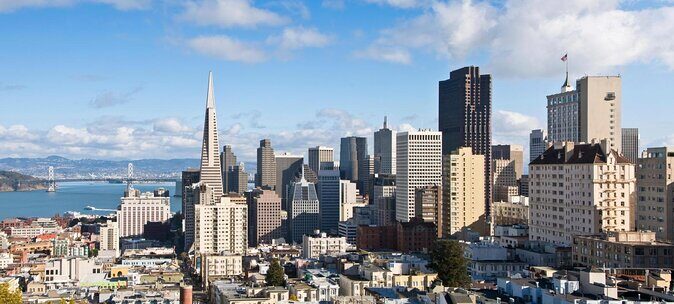
The tour ends near Market Street, at the Salesforce Terminal area with Salesforce Park—a rooftop garden that gives you a view of the skyline and the Bay. It’s the payoff: after stories about land changes, docks, and redevelopment, you get a high point where you can actually see the city’s layers at once.
This isn’t a generic “nice park” ending. The tour explains that the Salesforce project is one of the most visible tech imprints in recent San Francisco development. And it’s built on a site that used to be a beachfront natural gas refinery.
Even more grounded: the area was once home to a poor neighborhood called Tar Flat. The tour also points out Klockar’s blacksmith, a reminder of earlier metalworking in the neighborhood—small enough to miss if you’re rushing, but perfect for tying the industrial past to what you’re standing beside today.
California High Speed Rail: A Future Thread Through the Present
One of the highlights is the future path of California High Speed Rail. Even when a project feels far away, SF’s planning decisions land locally. The tour uses the idea of rail and transit to connect today’s real estate and development pressures with the kind of mobility SF wants next.
The practical takeaway for you: you’ll leave with a better sense of how major infrastructure plans can reshape where jobs and housing concentrate—and how that interacts with existing neighborhoods.
Walking Practicalities: Shoes, Shade, and a Mostly Flat Route
The tour is designed to be wheelchair accessible, and South of Market is described as the flattest neighborhood in San Francisco. That combination matters because it makes the stories easier to receive. Less time adjusting to steep terrain means more time noticing details.
Here’s what I’d plan for:
- Wear comfortable shoes (you’ll be on foot for the full 70 minutes).
- Dress for walking in the city streets.
- Use South Park’s seating and shade early if you need a break before the northward walk.
Also, don’t rush the photo moments. One of the best-reviewed elements is the way the guide uses historical photos to compare past and present. That works only if you slow down a bit and actually look where he points.
Price and Value: Getting Big Ideas for $30
The price is $30 per person for about 70 minutes. That’s not just “cheap walking”—it’s a tight format that packs multiple major themes into one guided route:
- startups and venture capital roots
- historic shipping infrastructure
- the consequences of urban renewal
- the tech-era skyline imprint at Salesforce
You also don’t need to worry about obligatory add-on fees. For many visitors, the value isn’t that you see more stops—it’s that you understand what you’re seeing. A guide who can connect Instagram-era offices to gold rush encampments and to policy outcomes makes the neighborhood feel legible.
If you’re local, this is also a good use of time. The guide’s background and passion show in how the walk feels like an education from someone who actually works around here.
Who Should Book This Tour (and Who Might Skip It)
This one fits you if you like San Francisco with context. You’ll enjoy it most if you want to connect:
- tech growth to earlier industrial and immigrant stories
- urban design to political consequences
- skyline views to what the land used to be
You might skip it if you’re only after famous sightseeing icons and don’t want a neighborhood-history focus. This tour is built around interpretation, not postcard moments—except for that rooftop skyline ending.
If you like your tours paced with frequent “look here” moments, it’s a strong match. Wes covers a lot with a lively, personal style, and the route is structured enough that even first-timers can follow without feeling lost.
Getting There and Leaving Smoothly
It starts in South Park, with meeting point options that can vary depending on which start you pick (one listed option is 162 S Park St). The exact meeting location may differ, so check what you select before you go.
It ends at the Salesforce Terminal area near Market Street. From there, you’ll have easy access to BART and MUNI, and the Powell Street cable car is about a 15-minute walk away. That makes the end convenient if you want to keep moving through the city after the tour rather than waiting for a ride.
Should You Book the San Francisco Technology and History Tour: South of Market?
If you’re deciding whether this is worth your time, I’d say yes—especially if you want SoMa to make sense beyond tech headlines. The combination of South Park’s layered timeline, 2nd Street’s shipping significance, and the way the tour treats urban renewal as a political and human story is exactly what makes a short neighborhood tour feel worthwhile.
It’s also a good deal in practical terms: 70 minutes, mostly flat walking, wheelchair accessible, and a strong ending at a rooftop garden where you can see the skyline and Bay.
FAQ
How long is the tour?
The tour runs for about 70 minutes.
What does it cost?
The price is $30 per person.
Where does the tour start?
It begins in South Park. The meeting point may vary depending on the option booked, and one listed option is 162 S Park St.
Where does the tour end?
It ends near Market Street at the rooftop garden area at Salesforce Terminal (Salesforce Tower).
Is the tour wheelchair accessible?
Yes, the tour is wheelchair accessible.
Is South of Market an easy walk?
South of Market is described as the flattest neighborhood in San Francisco, and the walk is mostly flat.
What are the main stops on the route?
You’ll visit South Park, walk along 2nd Street, go by Folsom Street, see Yerba Buena Gardens, and end at Salesforce Park rooftop garden.
What language is the tour guide?
The tour is guided in English.
What should I wear or bring?
Wear comfortable shoes and comfortable clothes.
Can I cancel for a full refund?
Yes. Free cancellation is available up to 24 hours in advance for a full refund.