REVIEW · SAN FRANCISCO
San Francisco Hop-on Hop-off Deluxe Tour 20 Stops 1 to 2 days
Book on Viator →Operated by San Francisco Deluxe Sightseeing Tours · Bookable on Viator
San Francisco’s cable-car city needs a shortcut. This hop-on hop-off deluxe loop is a simple way to cover major sights with a live English guide and on-board Wi‑Fi while you choose where to get off. Two things I like a lot: the route hits the big-name neighborhoods (so first-timers get oriented fast), and you can start at any stop instead of hunting for one fixed departure point. One downside to plan around is service hiccups. Some days include long waits, and a few riders have reported the narration or Wi‑Fi not working as advertised.
You also get a choice of 1 or 2 days, which matters in San Francisco because weather can change quickly. If you go for the full circuit, it’s an easy first-day strategy; then you can return for photos, museums, or street-level browsing on day two. My advice: bring layers for the upper deck, especially when you roll toward the Golden Gate area, and keep a little buffer in your schedule.
In This Review
- Key things to know before you hop on
- Price and how this tour fits your day
- Tickets, Wi‑Fi, and audio: what you must bring
- Where to start: the advantage of no fixed departure
- The circuit through San Francisco: stop-by-stop reality check
- Union Square
- Chinatown
- Financial District
- North Beach
- Pier 35 (1914)
- Pier 39 (walk about 100 meters)
- Fisherman’s Wharf
- Ghirardelli Square
- Fort Mason
- Lombard Street
- Palace of Fine Arts
- Golden Gate Bridge Vista Point
- Golden Gate Park
- Japanese Tea Garden
- Haight-Ashbury
- Alamo Square
- Civic Center
- The upper deck vs. downstairs: how to stay comfortable
- Waiting time and bus reliability: plan like a local
- What makes the guide matter (and when it helps)
- Cleanliness and equipment: a mixed bag you should know
- Is this tour worth $55? My value take
- Who should book this hop-on hop-off loop
- Should you book it
- FAQ
- How long is the tour?
- Is this tour offered as a 1-day or 2-day pass?
- How many stops are included?
- Where can I board the bus?
- Is Wi‑Fi included on board?
- Do I need earphones or a smartphone for the audio?
- Is there a live guide?
- Does the bus stop right next to Pier 39?
- Is hotel pickup or drop-off included?
- What is the cancellation policy?
Key things to know before you hop on

- Hop on anywhere on the route: no single start point, so you can meet the bus closer to where you’re staying.
- Live guide + audio app: there’s a guide on the bus in English, plus an audio guide app available in multiple languages.
- Wi‑Fi on board: included as a feature, but I’d still treat it as a nice-to-have rather than guaranteed everywhere.
- Pier 39 needs a short walk: the bus stop for Pier 39 is not right at the entrance; get off near Pier 35 and walk about 100 meters.
- Upper deck = best views, worst weather: wind and cold are part of the experience across the Golden Gate Bridge.
Price and how this tour fits your day
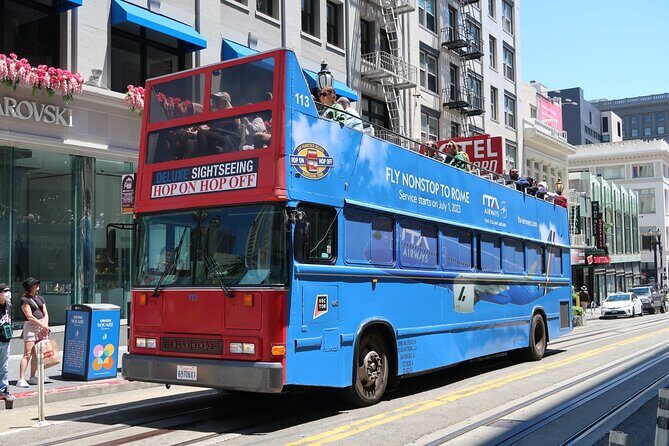
The big headline is value: for $55 per person, you’re buying a full day (about 8 hours for one circuit) of sightseeing that you can stretch across 1 or 2 days. That matters in San Francisco, where transit is doable but zig-zagging across the city can eat hours.
A hop-on hop-off bus is best for two jobs. First, it helps you see the map in real life. Second, it gives you a “menu” of stops so you can decide on the fly what you actually want to explore. I like that this one doesn’t lock you into a single schedule. You can do a full ride once, then hop off and repeat just the parts that grab you.
That said, this is still a bus loop. If the bus is delayed, your plans are affected. The tour’s structure is flexible, but it doesn’t magically erase traffic, weather, or inconsistent arrival times on certain days.
You can also read our reviews of more tours and experiences in San Francisco

Tickets, Wi‑Fi, and audio: what you must bring
This is a mobile-ticket experience. When you book, you’ll receive confirmation, and you’ll use your mobile ticket to get on. There’s a live tour guide on the bus in English, plus an audio guide app in multiple languages with your login included.
Here’s the practical catch: the company includes audio, but you bring the hardware. Earphones and a smartphone are not included, so pack your own. If you plan to use the audio app, test it before you board. San Francisco can chew up patience, and you don’t want to fight with a phone setup while you’re standing in the cold.
Wi‑Fi is listed as included on board. Several reports are positive about the overall experience, but some riders have said Wi‑Fi didn’t work. So: treat it as a bonus. If it connects, great. If it doesn’t, you’re not stuck without the main tour.
Where to start: the advantage of no fixed departure
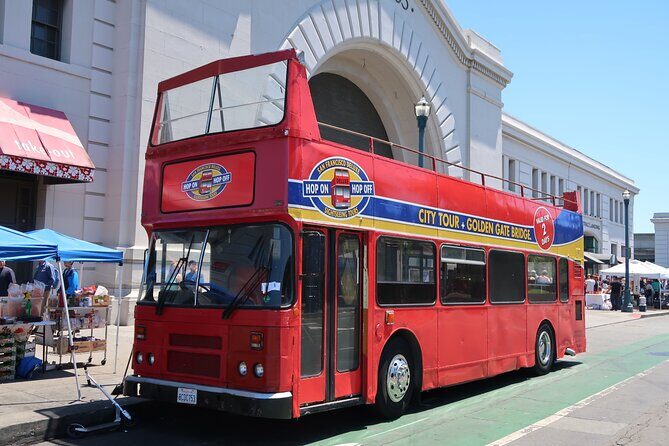
A lot of hop-on tours start from one place and force you to travel there first. This one is different. There’s no fixed start point, and you can hop on at stops along the route.
In real terms, that gives you two good options:
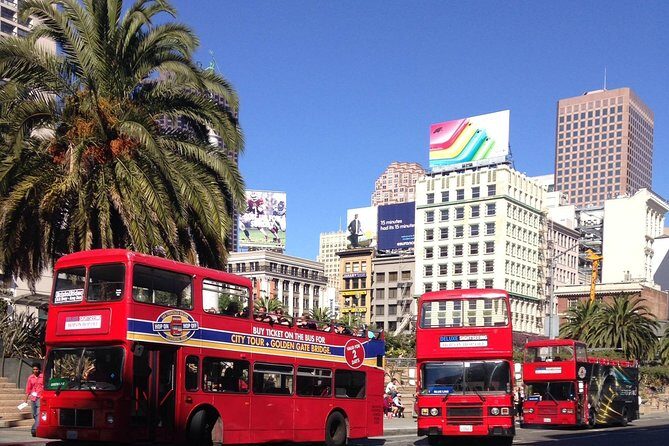
- If you’re staying near Union Square, it’s a natural starting area for shopping streets and cable-car nearby energy.
- If you’re staying closer to the waterfront or downtown offices, you can start nearer to the stops you care about most.
My rule of thumb: choose a start point that minimizes backtracking. Even with hop-on hop-off flexibility, you’ll save time by not zig-zagging just to board.
The circuit through San Francisco: stop-by-stop reality check
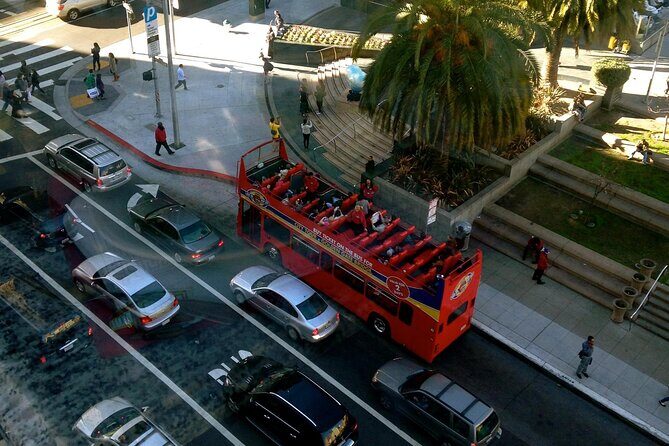
This route is designed like a highlights playlist. You’ll cover the downtown core, neighborhoods with strong personalities, and the big photo moments around the bay.
One note before the stops: the tour advertises 20 stops, but the route details you’ll see listed include these major points along the loop. Think of them as the anchor sights that shape the ride.
Union Square
You kick off in the center of downtown life: shopping streets, theaters, and the classic city buzz. It’s also a smart place to board if you want the most straightforward access to public transit.





Chinatown
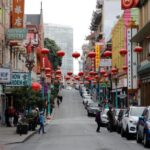
Then you slide into Chinatown’s tighter blocks and old-world gate energy. Look for the pagoda-style gates and soak in the mix of shops and restaurants. This is a good stop for walking a bit, then hopping back on before you get turned around.
Financial District
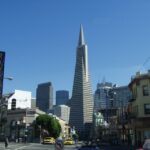
Right after Chinatown, you pass the downtown business core. You’ll mostly be looking from the bus here, but it’s valuable for orientation. San Francisco’s geography feels different once you see how the hills and neighborhoods shift around the downtown grid.
North Beach
North Beach is the neighborhood vibe shift. If you like old-school city streets and classic Italian-American energy, get off and take a short stroll. Even if you don’t go deep into any one place, this stop helps you understand the city’s character outside the waterfront.
Pier 35 (1914)
The waterfront shows up fast. Pier 35 is tied to the older working-structure story of this area. It’s a good “reset moment” to stretch your legs and look back at the skyline before you move to the more tourist-heavy piers.
Pier 39 (walk about 100 meters)
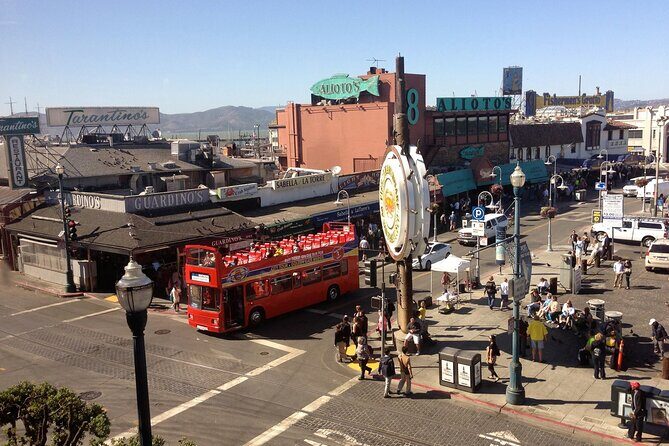
Pier 39 is one of the most popular stops, and you’ll likely want time here. The catch is logistics: the buses do not stop right next to Pier 39. Hop off at Stop 6, then walk about 100 meters from Pier 35 to Pier 39.
I’d plan a little extra time for this so you’re not rushing in the wind.
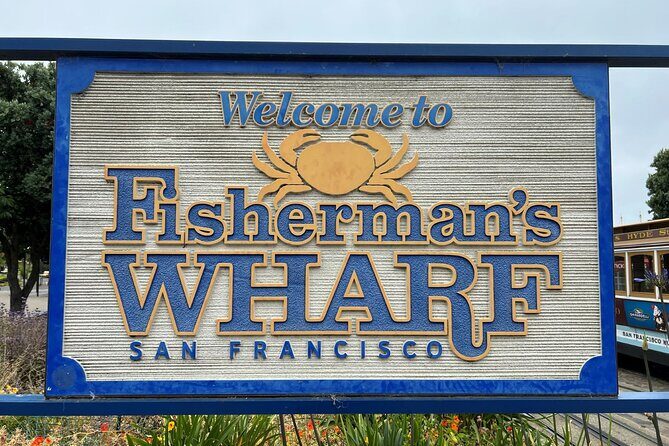
Fisherman’s Wharf
This is the classic postcard zone. Even if you mostly ride for views, it helps to get down at least once so you can walk the boardwalk streets and see what the area looks like in person.
Ghirardelli Square
Ghirardelli Square brings that “pleasantly famous” feeling. If you want a snack break or just a photo stop, this is an easy choice. It’s also a good reminder that the tour is designed for quick get-off points rather than long museum-style stays.
Fort Mason
Fort Mason adds a more open, breezy waterfront feel. It’s useful if you want a pause from dense crowds. You’ll get better “movement” around the water here, and it can be a nice stop for photos.
Lombard Street
Yes, it’s the famous crooked street. Even if you don’t have time to do more than look, this stop is worth it for the view and the quick wow factor.
Palace of Fine Arts
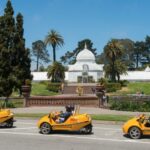
This area is a favorite for a reason: the architecture is easy to admire from the ground without needing a long schedule. Take a slow walk and give yourself enough time to frame a couple photos.
Golden Gate Bridge Vista Point
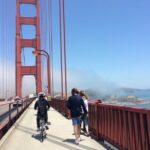
This is the big moment. Get your camera ready early, because you’ll feel the temperature drop and the wind increase as the bus approaches the bridge area. Reviews also flag that the ride across the Golden Gate can be extremely cold and windy on top.
If you’re bundled up, this is one of the best stops on the whole route.
Golden Gate Park
Golden Gate Park is huge, so the stop works best as a “jumping-off” point. Use it to scout where you want to return later. Even a short look here helps you understand how the bridge and the city connect visually.
Japanese Tea Garden
If you’re into gardens or calmer scenery, this stop is one of the most satisfying. The area is a quieter pocket compared with the waterfront and downtown intensity.
Haight-Ashbury
This is where the tour shifts from monuments to neighborhood identity. Haight-Ashbury has a strong look and feel, and even a quick walk can help you understand why it became part of American pop culture.
Alamo Square
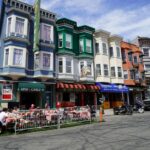
Alamo Square is a classic photo target. If you want views with city charm, this is a solid “get off and stroll” stop rather than just a ride-by.
Civic Center
This rounds out the downtown-ish side of the loop. It’s a good stop for architecture and for seeing the city’s institutional side.
The upper deck vs. downstairs: how to stay comfortable
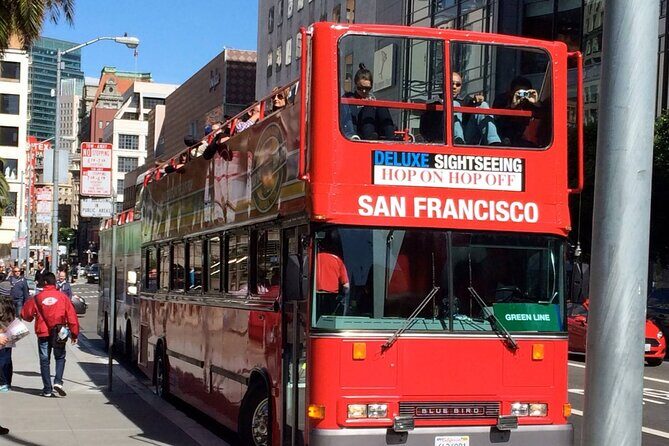
For views, the upper deck is the move. People repeatedly mention how awesome the top looks, and that’s true here. But San Francisco weather doesn’t care about your sightseeing plans. When you’re near the bridge area, it can get very windy and cold.
If you’re sensitive to cold:
- dress in layers
- bring a hat or gloves
- don’t wait too long to decide whether you’ll move downstairs for comfort
Some reports also mention dirty windows on certain buses. If you notice that, upstairs can still be tough because you rely on clear sightlines. If you spot a cleaner section of glass, switch sides or move seats if you can.
Waiting time and bus reliability: plan like a local
Here’s the honest part: hop-on hop-off tours depend on frequency, and frequency depends on operating conditions. Some riders have described queues lasting well over an hour, buses arriving late, and routes not fully behaving as expected on certain days.
That doesn’t mean you should cancel the plan. It means you should treat the day like this:
- Build in buffer time between major stops.
- If you hop off for a short photo, check the approximate return timing before you wander far.
- Decide in advance how you’ll handle delays: are you okay staying on the bus to the next stop, or do you want to walk between close stops?
A practical tip I like: when you hop off, note the next boarding window in your head. One review even suggests using 30-minute increments as a rough guide. That mindset keeps you from getting stuck waiting with no plan.
Also, keep your expectations realistic on the audio side. Some riders have reported that speakers didn’t cover highlights at the right moment, or that the audio didn’t match perfectly with what they were seeing. If the live guide is onboard and engaged, you’ll still get useful context even when the electronics act up.
What makes the guide matter (and when it helps)
The tour includes a live English guide on board. That’s not a small detail. In some cities, the audio track runs and nobody looks up. Here, some drivers and guides are praised for being funny and for calling out what to photograph.
Names show up in feedback: Willie and Pablo are mentioned as helpful and entertaining. There’s also praise for guides who give timing cues, like letting you know when it’s time to get your camera ready. If you end up in a departure where the audio system underperforms, a good live guide can still make the ride worthwhile.
Cleanliness and equipment: a mixed bag you should know
This tour is on a double-decker bus. Most of the experience is about views and neighborhoods. Still, the condition of the vehicle affects enjoyment.
A few reports mention:
- older buses
- dirty windows, especially on the lower level
- speaker quality issues on some rides
- Wi‑Fi not working as advertised
How do you use this info? You lower your frustration by coming prepared. Bring eye care for smudgy windows (use your cloth or wipe if you have one), and don’t plan your whole day around one perfect narration track working flawlessly.
Is this tour worth $55? My value take
For $55 per person, you’re paying for convenience: one ticket that covers a long list of iconic stops, with a live guide and an audio app. You’re also paying for time savings versus figuring out where to start, where to end, and how to connect neighborhood-to-neighborhood.
It’s also fairly priced compared to doing many separate guided experiences across the city, especially if you’re doing the route at a relaxed pace.
Where the value can drop is when you hit:
- long waits for the next bus
- partial route behavior on a given day
- technical issues like Wi‑Fi or audio problems
If you go in expecting a flexible “best-of” circuit and not a clockwork experience, the price starts to make sense fast.
Who should book this hop-on hop-off loop
This tour is a good fit if:
- you’re short on time and want a first pass at San Francisco
- you like having choices, not fixed plans
- you want waterfront + neighborhoods + city landmarks in one day
- you’re comfortable dressing for cold wind and changing plans if a bus runs late
It’s less ideal if:
- you need strict timing to make museum reservations
- you hate waiting in line or standing in cold weather
- you want a guaranteed, perfectly synced narration experience every single stop
Should you book it
I’d book this tour if your goal is orientation and flexibility. Start near Union Square if you want an easy downtown anchor, or pick a boarding stop that lines up with your top priorities. If you can handle delays with a calm plan, it’s a solid way to see a lot without overthinking transit.
I would not book it as your only transportation backbone for a tightly scheduled day. Have a Plan B for delays, and keep your warm layers handy for that Golden Gate Bridge stretch.
Finally, with the current mixed reports about service reliability, I’d choose the day you’re most able to absorb changes. San Francisco is gorgeous, but it’s also a city where weather and operations can shift fast.
FAQ
How long is the tour?
The tour duration is listed as about 8 hours.
Is this tour offered as a 1-day or 2-day pass?
Yes, you can choose a 1-day or 2-day pass to fit your sightseeing schedule.
How many stops are included?
The tour is advertised as having 20 sightseeing stops on the hop-on hop-off route.
Where can I board the bus?
There is no fixed start point. You can hop on at any of the stops on the route.
Is Wi‑Fi included on board?
Yes. Wi‑Fi is included on the bus.
Do I need earphones or a smartphone for the audio?
Earphones and a smartphone are not included. The tour includes login access to an audio guide app, but you’ll need your own phone and earphones.
Is there a live guide?
Yes. There is a live tour guide on the bus in English, in addition to the audio app.
Does the bus stop right next to Pier 39?
No. The buses do not stop right next to Pier 39. For Pier 39, hop off at stop number 6 and walk about 100 meters from Pier 35.
Is hotel pickup or drop-off included?
No. Hotel pickup and drop-off are not included.
What is the cancellation policy?
You can cancel for free up to 24 hours in advance for a full refund. If you cancel less than 24 hours before the start time, no refund is provided. If canceled due to poor weather, you’ll be offered a different date or a full refund.