REVIEW · SAN FRANCISCO
Fisherman’s Wharf Walking Tour
Book on Viator →Operated by ExperienceFirst · Bookable on Viator
Fisherman’s Wharf never stays quiet. This 1 hour 15 minutes walk is a smart way to cover major landmarks like the Golden Gate Bridge and Pier 39, while slipping in offbeat stops such as Musée Mécanique and the historic cannery area. I especially like how it stays fun and educational without feeling like a lecture, and I also like the quick-hit pacing that fits a short stay. One drawback to consider: a few parts may feel easy to do on your own, so if you want deep, slow storytelling, this may feel a touch rushed.
I like that you get an English-speaking guide and a mobile ticket, and the group stays small (up to 25 people). It’s also booked far in advance on average, so if you’re traveling in peak season, you’ll want to lock it in early. If your goal is photo ops plus a handful of history stops, this hits the target.
In This Review
- Key highlights I’d plan around
- The “why this works” idea: major sights + oddball history
- Starting at 700 Beach St: you’ll know exactly where to meet
- Aquatic Park views: the bay first, not last
- Cable cars: not just rides, but context
- Ghirardelli Square: the iconic sign moment
- Golden Gate Bridge photo op: a view stop that actually fits the day
- The Cannery: the area where old industry became a destination
- Fisherman’s Wharf: the “oldest neighborhood in SF” feeling
- Musée Mécanique: vintage arcade that doubles as culture
- WWII submarine USS Pampanito: history you can see in person
- WWII-era ship SS Jeremiah O’Brien: a second naval stop, not repetition
- Angel Island Immigration Station: the Ellis Island of the West idea
- Sea lions at Pier 39: the iconic finale
- Private tour option: worth it if you want more control
- Price and value: $39 is really paying for time and guidance
- What guides can add: the names that kept showing up
- The main downside to plan around: pacing may feel like a speed walk
- Who should book this (and who might not)
- Should you book Fisherman’s Wharf Walking Tour?
- FAQ
- How long is the Fisherman’s Wharf walking tour?
- How much does the tour cost?
- What language is the tour offered in?
- What’s included in the price?
- What is not included?
- Where does the tour start and end?
- Is there a private tour option?
- How big is the group?
- Can I cancel for a full refund?
Key highlights I’d plan around
- Off-beat stops built into a short loop: Musée Mécanique plus WWII ships, not just the usual waterfront photos
- Classic San Francisco icons in sequence: cable cars, Ghirardelli Square, Sea Lions at Pier 39
- A guide who can set the pace: from quick curiosity moments to clearer explanations at each stop
- Great for tight schedules: you can see a lot in about 90 minutes
- Small group size: maximum 25 keeps it from feeling chaotic
- Private tour option: personal attention if you want a more tailored walk
The “why this works” idea: major sights + oddball history
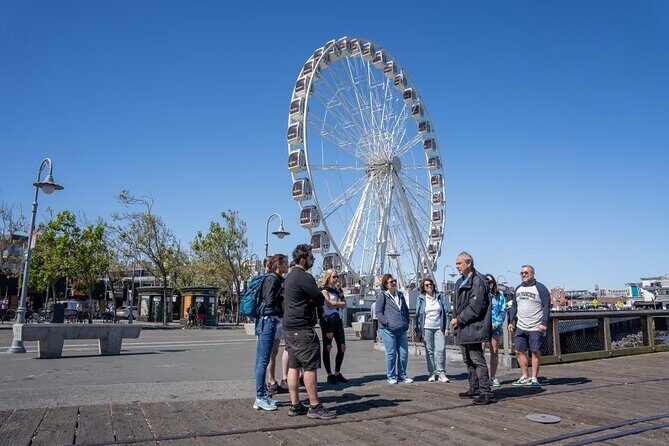
This tour is built like a best-of sampler. You’re not wandering aimlessly for an hour and a half hoping the day lines up. Instead, you get a structured path that hits the places most people want—then adds surprising detours that make Fisherman’s Wharf feel more like a real neighborhood than a theme park.
I like the balance: it mixes big visuals (bridge views, cable cars, sea lions) with tangible history you can actually stand beside. And because so many stops have free entry, the value comes from time and guidance more than ticket fees.
You can also read our reviews of more walking tours in San Francisco



Starting at 700 Beach St: you’ll know exactly where to meet
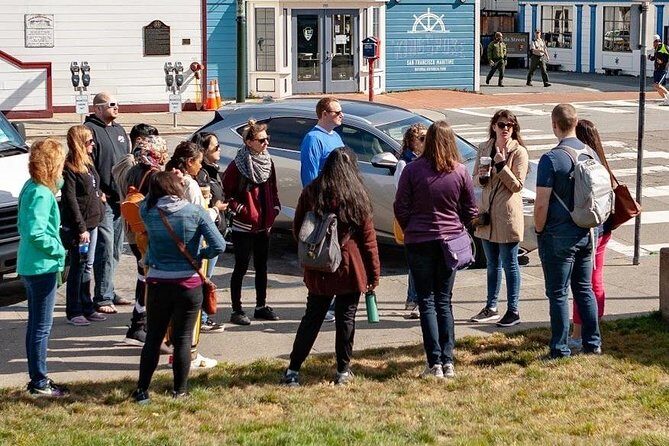
You begin at 700 Beach St, and the meetup point is in front of the Welcome to Fisherman’s Wharf sign by the cable car turnaround. That matters because Fisherman’s Wharf is busy and the streets shift fast from quiet corners to crowds.
The tour ends near the Crab House at Pier 39 area, and it concludes at Pier 39. If you’re thinking about your next move—coffee, seafood, or heading onward—Pier 39 is a clean landing spot.
Aquatic Park views: the bay first, not last
The first stop is Aquatic Park, which is a nice way to reset your eyes from street-level to water-level. Even if you’ve seen postcards of San Francisco, this early peek helps you understand the bay’s scale. It also sets the mood: you’re walking along places that feel tied to the water, not just staged for tourists.
What to watch for here: the general bay geography. It’s the kind of orientation that makes later bridge and island views feel more logical, not random.
Cable cars: not just rides, but context
Next come the cable cars—and the tour doesn’t treat them like a simple photo stop. You learn about how the system works historically and you can watch the cars in action.
Practical benefit: cable cars can be slow and crowded when you try to fit them in by yourself. Seeing them as a guided part of the walk helps you connect the street-level experience to the history without adding extra logistics.
Ghirardelli Square: the iconic sign moment
At Ghirardelli Square, you’ll get a classic “check it off” moment—especially the famous sign. This stop is short, which is good. The goal isn’t to turn this into a long shopping break. It’s to give you a recognizable anchor point early, then keep moving.
If you like photos, this is an easy win. If you’re not into crowds or sweet spots, you can treat it as a quick stop and get back to the walking.





Golden Gate Bridge photo op: a view stop that actually fits the day

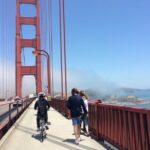
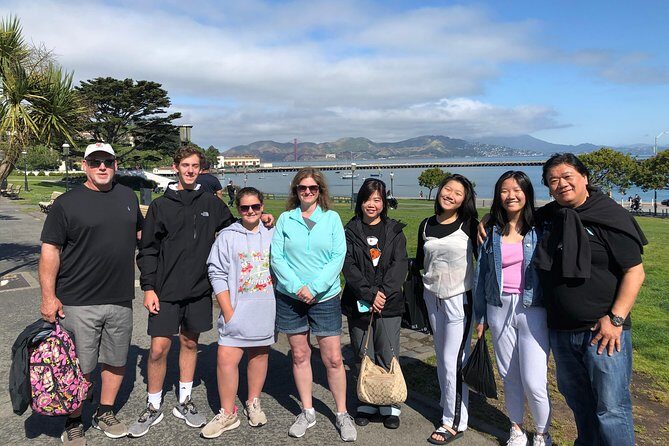
The tour includes a Golden Gate Bridge viewpoint that’s described as a perfect photo op. For many visitors, this is the “wow” moment that makes the whole Fisherman’s Wharf area feel connected to the wider city.
The key thing to remember: a viewpoint stop is only as good as the timing. Here, it’s integrated into the loop, so you’re not chasing the bridge after you’ve already walked yourself tired.
The Cannery: the area where old industry became a destination
Then you move to The Cannery, the old Del Monte Fruit Cannery area. This is one of those spots where the setting does the storytelling for you: a historic building now used for restaurants, hotels, shops, and activities.
Why I think this stop works: it’s not just pretty architecture. It’s a reminder that Fisherman’s Wharf grew from practical working waterfront life. Even if you don’t go inside anywhere, the exterior gives you a sense of place.
Fisherman’s Wharf: the “oldest neighborhood in SF” feeling
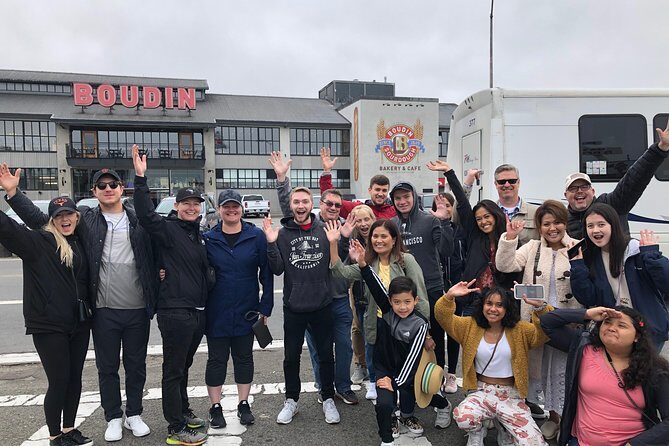
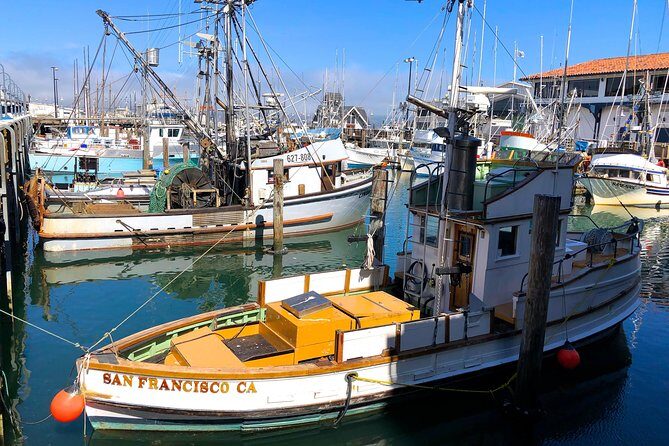
Now you’re in the heart of Fisherman’s Wharf, described as the oldest neighborhood in San Francisco. This part gives you the waterfront texture: the walking density, the maritime vibe, and the sense of “people here come to hang out.”
What you’re really getting from a guided walk at this stage is meaning. Without guidance, it’s easy to see only the surface—shops, signs, and souvenirs. With a guide, you’re more likely to notice why the neighborhood looks the way it does and how it’s changed over time.
Musée Mécanique: vintage arcade that doubles as culture
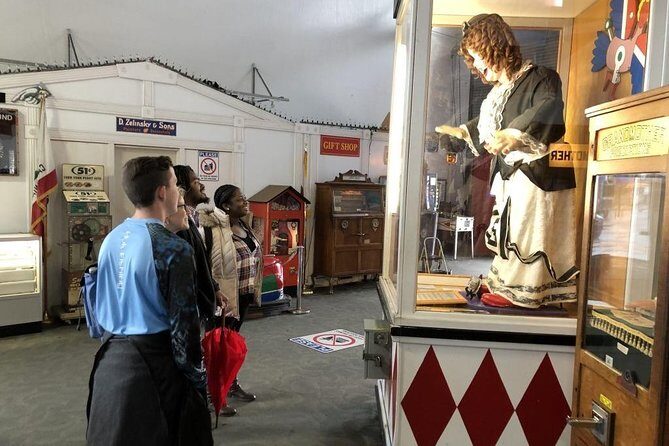
One of the most loved stops is Musee Mecanique, a vintage arcade. It’s the kind of place that sounds quirky until you’re there, then you realize it’s also a time capsule.
This stop is typically quick, but it’s memorable. You get to see and play with the idea of classic waterfront amusements rather than just pass another gift shop. If your group includes people who love odd history, this is a strong “happy surprise” stop.
WWII submarine USS Pampanito: history you can see in person
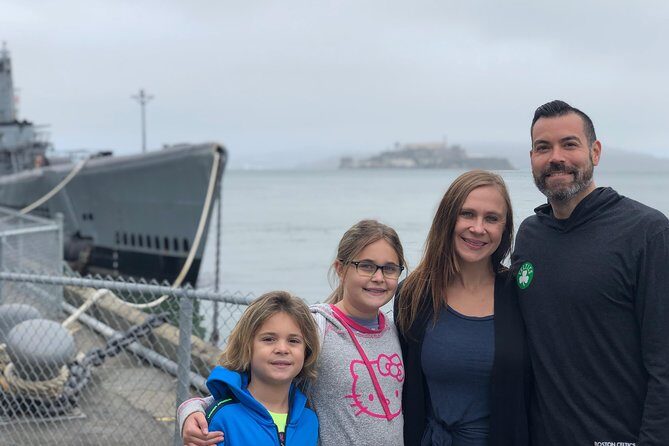
Next you’ll visit the USS Pampanito, an old World War II submarine. Standing beside a vessel like this is different from reading about it. The size, the structure, and the heavy reality of it make the story feel more immediate.
Tour value here: the guide can help you understand what you’re looking at without forcing you into a museum-style timeline.
WWII-era ship SS Jeremiah O’Brien: a second naval stop, not repetition
After the submarine, you also see the SS Jeremiah O’Brien, described as an old functioning World War II–era naval ship. This matters because it’s not just another display boat. It’s specifically noted as functioning, so the stop has a slightly different feel than the “static exhibit” experience.
If you like military history, or if you want something more substantial than sightseeing, this pair of stops makes the walk feel uniquely San Francisco.
Angel Island Immigration Station: the Ellis Island of the West idea
The tour includes Angel Island Immigration Station, framed as the Ellis Island of the West. You’ll hear the story and get views from Pier 41 in San Francisco.
Why this is a smart add-on: it connects the waterfront to broader migration and immigration themes. It also expands your mental map beyond “just this pier” because you’re thinking about what people saw when they arrived from afar.
If your trip has room for one deeper historical chapter, this is it.
Sea lions at Pier 39: the iconic finale
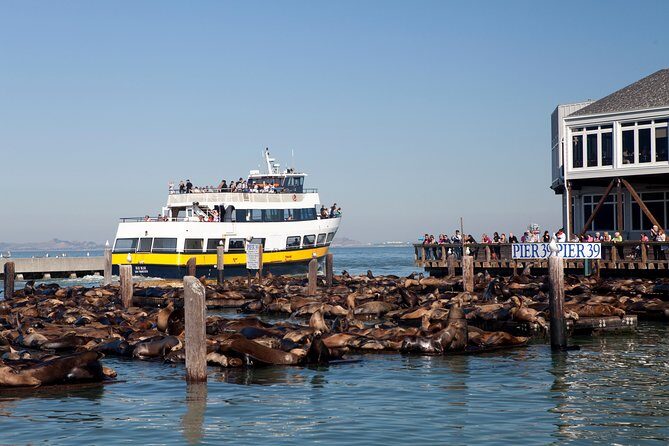
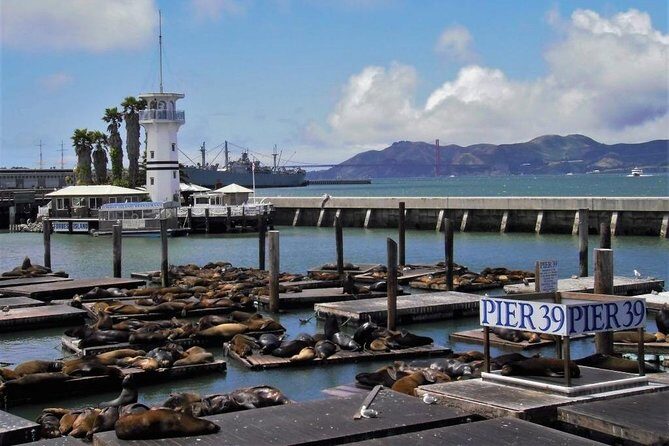
You’ll finish with the Sea Lion Center area and Pier 39, where sea lions are part of the scenery in a big way. This is where the tour becomes fully “Fisherman’s Wharf,” with history talk mixed into a lively waterfront setting.
I like ending here because it gives you flexibility. Once the tour concludes at Pier 39, you can keep walking, snack, or just watch the animals without feeling like you must rush for the next bus.
Private tour option: worth it if you want more control
The tour offers a private tour option for personal attention. That’s especially useful if you hate the feeling of a group moving you along, or if you want time for extra questions at stops like the WWII ships or Angel Island.
If you’re traveling with kids, or you want slower pacing for photos, private can turn a fast sampler into a more comfortable experience.
Price and value: $39 is really paying for time and guidance
At $39 per person for about 1 hour 15 minutes, the cost can be a great fit if you’re short on time and you want structure. One reason is that the stops listed are all free in terms of admission ticket noted for each attraction. So you’re not stacking your day with extra entry fees.
What you are buying is:
- a guide to connect the sights into a story
- efficient routing so you don’t waste the day figuring out the next stop
- a small-group feel (max 25)
My caution: if you’re the kind of traveler who just wants to wander and you’re already comfortable planning on your own, you might find parts of the loop are close together anyway. In that case, you’ll still enjoy the guidance—but you may not feel the tour is strictly necessary.
What guides can add: the names that kept showing up
Some reviews highlighted guide skills clearly. Names mentioned include Marie, John Hurst, Seth, and Jamie, and the common thread was pace plus clear explanations.
A small, practical takeaway for you: if you get a guide who keeps moving with steady energy, the tour feels fun rather than forced. When pace drifts or the group pauses too long at popular spots, it can feel less engaging. That’s not a problem you can fully predict, but it’s worth knowing what to watch for.
The main downside to plan around: pacing may feel like a speed walk
One criticism worth taking seriously: the route can feel like it’s mostly within easy walking distance of each other, so if you’re already confident you can self-guide Fisherman’s Wharf, you might feel this is more structured than you needed.
Also, if you’re easily distracted or you get bored when you’re listening for too long in busy areas, pay attention to your own style. For some people, the story moments hit just right. For others, the pace may feel like too much input in too little time.
Who should book this (and who might not)
This tour is a good match if you:
- have limited time and want a “see a lot fast” approach
- want both classic sights and a few unusual stops
- like history that’s visible and walk-up friendly (submarines, ships, immigration station)
It might not be your best choice if you:
- prefer independent wandering with no set stops
- want long stays at fewer sites
- dislike being kept on a schedule
Should you book Fisherman’s Wharf Walking Tour?
If your trip plan is tight, I’d book it. $39 for roughly 90 minutes with a guide and no extra admission fees is a strong value for first-time visitors. Add in the offbeat stops—Musée Mécanique and the WWII ships—and it becomes more than a simple waterfront walk.
If you’re local or you’ve already planned a self-walk of Pier 39 and the bridges, you can probably replicate some of the surface sightseeing on your own. In that case, book only if you specifically want the guide’s context at the heavier-history stops.
FAQ
How long is the Fisherman’s Wharf walking tour?
It lasts about 1 hour 15 minutes.
How much does the tour cost?
The price is $39.00 per person.
What language is the tour offered in?
The tour is offered in English.
What’s included in the price?
An English-speaking tour guide is included, and you’ll use a mobile ticket.
What is not included?
Food or drinks are not included, and guide gratuities are appreciated.
Where does the tour start and end?
It starts at 700 Beach St, San Francisco, CA 94109, and ends at Pier 39. The end point is listed as Crab House at Pier 39, 2 Beach St, San Francisco, CA 94133.
Is there a private tour option?
Yes, you can opt for a private tour for personal attention from your guide.
How big is the group?
The tour has a maximum of 25 travelers.
Can I cancel for a full refund?
Yes, you can cancel up to 24 hours in advance for a full refund. If you cancel less than 24 hours before the start time, there is no refund.