REVIEW · SAN FRANCISCO
San Francisco Self-Guided Audio Drive: Explore at Your Own Pace
Book on Viator →Operated by Adventures with Action · Bookable on Viator
San Francisco can feel like a lot. This audio drive helps you steer it with hands-free narration and offline maps. You follow location-based audio as you drive, so you get the city story at the pace you choose. It covers the landmarks most road trips hit, plus the angles you’d miss if you only used your own guesswork.
Two things I like a lot: the experience is set up for your timing, not someone else’s schedule—you can pause, take snack breaks, and jump out for short looks. And the audio itself is the star: you get a steady narrator and more than 43 separate stories spread over a 17+ mile route.
One consideration: it’s a driving tour first, not a stop-everywhere walking plan. If you get stuck in rush hour traffic, you may feel like the route is moving slower than you want, and some stops won’t give you much room to pull over.
In This Review
- Key highlights to know before you drive
- A San Francisco audio drive that actually fits real schedules
- Where the tour begins: Alamo Square to set your bearings
- Painted Ladies and City Hall: the quick intro that makes everything else click
- Lombard Street hairpins and Telegraph Hill views
- Coit Tower and the housing-culture reality check
- Chinatown by car: stories, landmarks, and one optional foot stop
- Embarcadero, Ferry Building, and the bridge story before you cross
- Union Square: theaters, Dewey, and city life beyond the postcards
- Fisherman’s Wharf, Crissy Field, and getting the Golden Gate Bridge story in order
- The last stretch: ending at Golden Gate View Point
- How to keep the audio synced and avoid route friction
- Who this drive is best for (and who should think twice)
- Quick FAQ for planning your SF driving day
- FAQ
- How long does the San Francisco self-guided audio drive take?
- Where do I start and where does it end?
- Is there an in-person guide with this tour?
- Does it work offline?
- Do I need tickets or reservations for the stops?
- Can I start the tour anytime during the day?
- Is the price per person or per car?
- Should you book this San Francisco audio drive?
Key highlights to know before you drive
- Lifetime access, no expiry so you can reuse it on another trip
- Offline maps and audio that keep working after download
- Hands-free, location-triggered stories that play based on where you are
- One purchase per vehicle so groups usually pay less than bus tours
- A route that goes landmark to landmark from Alamo Square to the Golden Gate
- Real value at $16.99 per person when you share the purchase inside the car
A San Francisco audio drive that actually fits real schedules
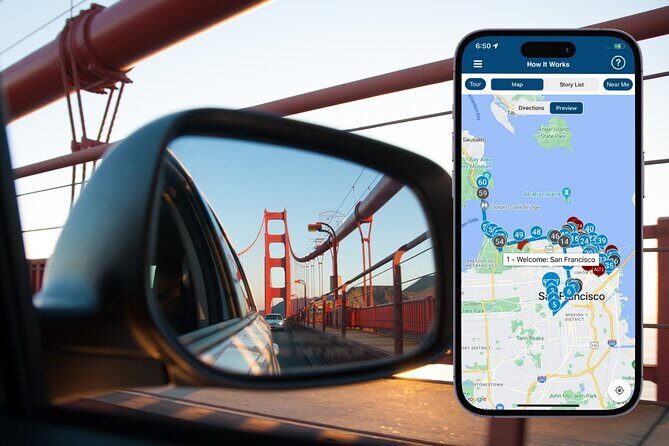
This is one of those San Francisco ideas that makes sense the moment you think about it. You’re in a car anyway. Why not turn the drive into learning and story time?
You pay $16.99 per person, but the key value is that it’s one purchase per vehicle, meaning you’re not paying separate tickets for each person in your car. For many groups, that can undercut hop-on hop-off bus costs, especially if you’ll spend most of the day touring instead of rushing in and out.
I also like that it’s not tied to a strict start moment. The tour is valid in the hours listed (6:00 AM to 9:00 PM). But within that window, you can start when it works for your day, and you can pause and continue later. That flexibility matters in San Francisco, where traffic and parking can change your plans faster than you can say Lombard Street.
You can also read our reviews of more guided tours in San Francisco


Where the tour begins: Alamo Square to set your bearings
You start at Steiner Street in Alamo Square Park, in the classic view zone people use as a first mental snapshot of the city. From there, the audio guides you through a loop of iconic stops, then finishes at the Golden Gate Bridge area.
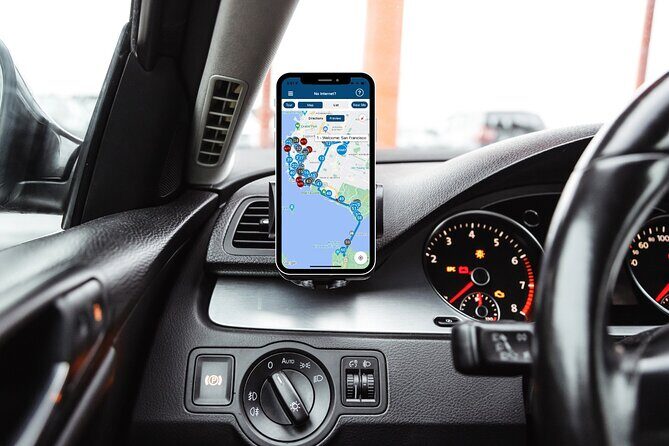
No one meets you. That’s intentional. You park, open the app at the start point, and the first story starts automatically. Then you follow the audio cues to the next location.
Before you go, plan your phone setup. You’ll want a working internet connection to download the tour content while you’re on strong Wi‑Fi or cellular, since it works offline after that. After download, you’re good even if you lose service.
You also need a way to hear the audio. The tour supports connecting your phone to the car stereo using Bluetooth, USB, or AUX. Apple CarPlay playback is listed as compatible, but if your car setup doesn’t cooperate, using Bluetooth/AUX is the reliable fallback.
Painted Ladies and City Hall: the quick intro that makes everything else click
The route kicks off with the Painted Ladies at Alamo Square. The audio doesn’t just point at the buildings. It explains how they got their vivid, postcard-friendly look. That’s useful because San Francisco is full of neighborhoods where the architecture tells a story. Once you hear why these homes are so distinctive, you start noticing details everywhere else.
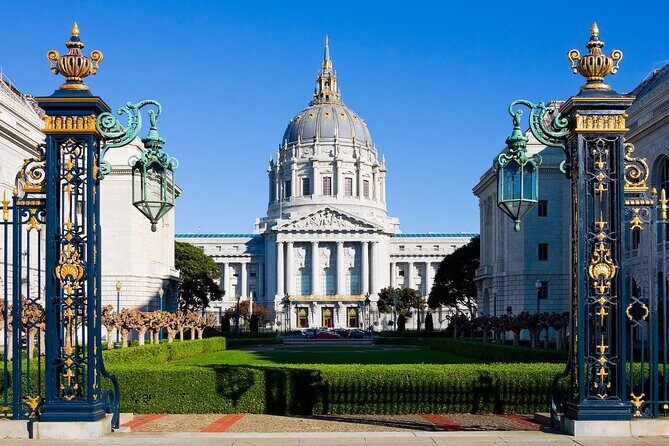
Then you move on to San Francisco City Hall, the massive marble landmark that looks like it belongs on the cover of a civic history book. The narration focuses on how the city was founded and why it grew. Even if you already know the basics, you’ll usually pick up one or two new angles when the story is timed to the street view in front of you.
If you’re short on time, this early segment is a smart use of your driving. It’s not just scenic. It’s orientation, which helps your later stops feel less random.
Lombard Street hairpins and Telegraph Hill views
Next comes Lombard Street, the one-block legend with the famous eight hairpin turns. The audio warns you to drive carefully. And that matters, because it’s a place where visitors gather and where you might feel rushed simply because other cars are stacking up around you.
A practical tip: treat Lombard Street like a slow crawl, not a place to do anything fancy with your timeline. If you’re going for photos, plan to do them while you’re actually stopped or moving very slowly. If you try to do photo hunts while the line of cars keeps moving, it can become stressful fast.
From there, you head up to Telegraph Hill, where the story ties into one of SF’s most consistent rewards: the view. From the hill, you get a look out over the bay and the skyline. This is the part of the tour where you’re not just learning about SF. You’re watching it—layers of city and water that explain why this place pulls people in year after year.
Coit Tower and the housing-culture reality check
Then you climb to Coit Tower for a high vantage point. The payoff is the view from above. And the audio follows that with a more grounded topic: rapid real estate growth and the housing crisis.
That housing angle is a nice balance in a tour full of iconic scenery. A lot of SF sightseeing can skim the surface—pretty facades, big views, famous streets. Here, the narration nudges you to think about what’s changing and why the city can feel so tight and complicated, even when it looks effortless from a lookout.
If you’re the type who likes your travel stories with a little context, this stop is one of the better reasons to do an audio guide instead of just following a map.
You can also read our reviews of more tours and experiences in San Francisco



Chinatown by car: stories, landmarks, and one optional foot stop
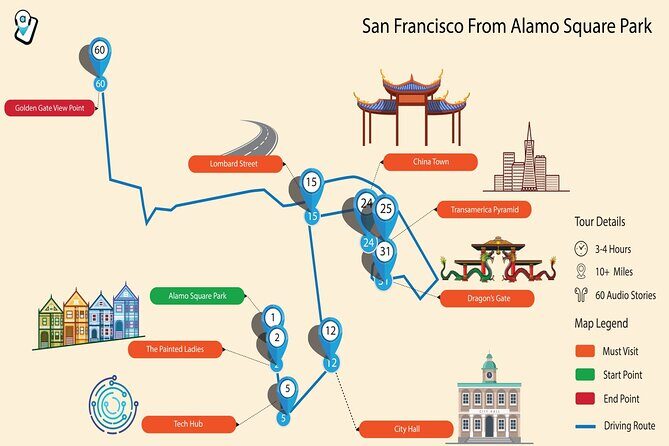
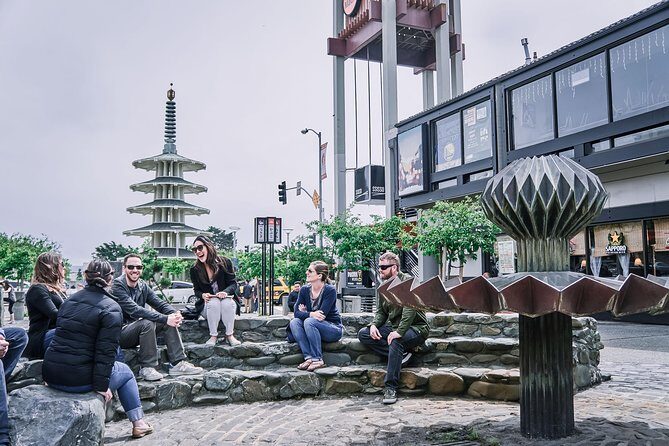
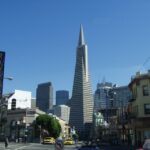
Chinatown is where the tour leans into cultural impact. As you drive through, you hear about Chinese and Asian immigrants and how they shaped San Francisco. You also pass a strange landmark: a large glass pyramid, and the audio explains its unusual history.
You’ll also get oriented with specific Chinatown symbols as you roll along:
- the Chinatown Mural
- the Old Chinese Telephone Exchange
- and the Dragon Gate, which the tour highlights as an entrance at the intersection of Bush Street and Grant Avenue
One of the smartest add-ons here is the optional moment to jump out and walk around the neighborhood. The audio suggests exploring the food, drinks, and desserts nearby. That’s a good match for this part of SF because Chinatown rewards slow wandering, and the rest of the drive is better when you don’t try to force it into one rushed pass.
You may want to time this so you’re not sprinting between photo stops. If you’re with kids or someone who gets carsick, this is also a section where stepping out briefly can feel like a reset.
Embarcadero, Ferry Building, and the bridge story before you cross
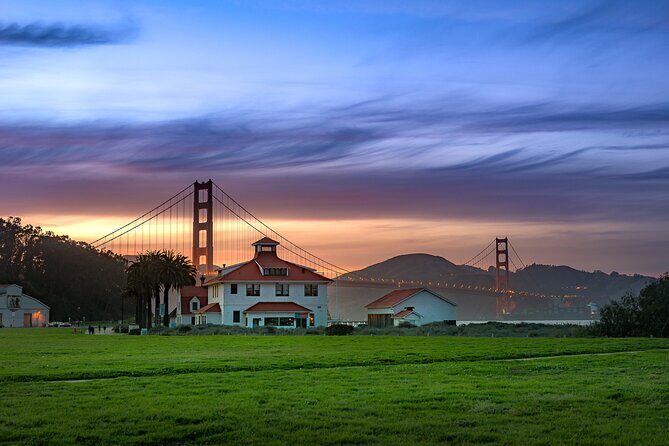
As the drive swings toward the waterfront, the narration turns to maritime history and even SF’s gold-digging past. Then you reach the Embarcadero, where you can branch to explore on your own.
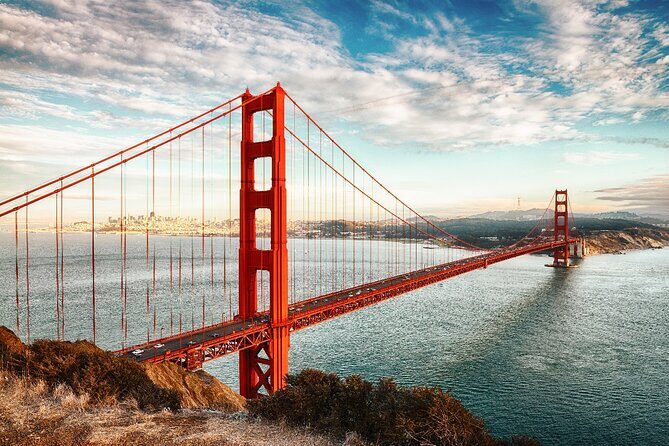
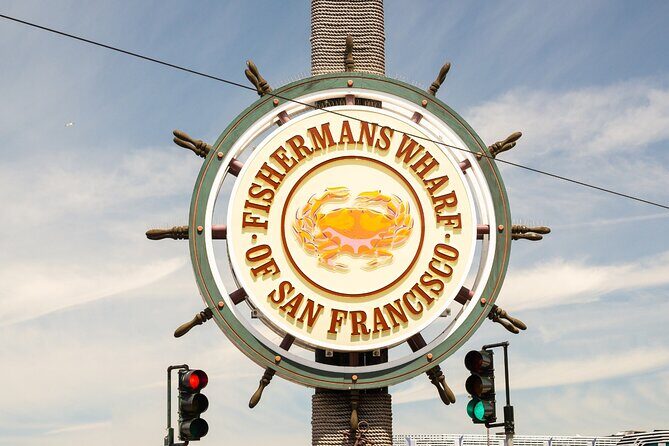
The audio specifically points you toward the Ferry Building area and the Fisherman’s Wharf direction. It also frames a classic SF sight: a trip over the Golden Gate Bridge and how it almost didn’t exist. Even if you’ve seen the bridge a dozen times in photos, that kind of story gives it a different weight.
From there, you get a stop at Ferry Building (it’s short, about five minutes to line up and take it in). This is one of those moments where you’re mostly repositioning and letting the audio connect the city’s trade and water heritage to what’s coming next.
Union Square: theaters, Dewey, and city life beyond the postcards

Next is Union Square, a central spot that mixes landmark history with shopping and theater energy. The narration points out the Dewey Monument, plus the surrounding theaters and the way the area functions as a hub.
You’ll also pass upscale shops, art galleries, and cafes. This stop works best if you treat it as a quick orientation break rather than a long stay. Ten minutes is listed here, and that lines up with the tour’s overall flow.
If you want more time, you can pause the audio and linger. But if you keep moving at the tour’s pace, Union Square becomes a clean bridge between the waterfront and the big Golden Gate payoff.
Fisherman’s Wharf, Crissy Field, and getting the Golden Gate Bridge story in order
Next comes Fisherman’s Wharf, where the Golden Gate Bridge becomes the star of the story. The narration covers how many different kinds of problems had to be solved during construction—money, engineering, design issues, and even life-threatening risks. It’s the kind of behind-the-scenes framing that makes you appreciate the bridge as more than a photo backdrop.
Then you hit Crissy Field for phenomenal views. This is where the audio explains why the bridge is red, talks about what opening week might have felt like, and connects the bridge’s role as modern transportation.
After that, you cross the bridge. The audio mentions the Golden Gate Welcome Center and the construction history you can pick up there. It also notes that the Golden Gate has become a favorite Hollywood setpiece—an extra nudge if you’ve ever seen SF scenes that were clearly filmed around here.
One warning: the Golden Gate area can be busy and timing can get messy with traffic. If you’re doing this on a weekday commute window, accept that you may be stopping more than the tour plan implies. The audio will still be there, but your day may not feel as smooth as it looks on paper.
Near the end of the drive, the route also threads in story beats about San Francisco as a technology hub, including mentions of Uber and Twitter headquarters. There’s also a stop tied to SFMOMA (San Francisco Museum of Modern Art), and it frames how the city’s identity isn’t just scenery and old stone. It’s design and modern culture too.
The last stretch: ending at Golden Gate View Point
The tour finishes at a Golden Gate View Point location on the far side of the bridge area. This is a strong way to close because you’re looking at the city from a grand SF angle, not just moving from one stop to the next.
If you’re planning a longer day, keep this ending in mind. This is where you can decide whether you want to:
- take a final set of photos
- walk around if you’re feeling fresh
- or head out without trying to squeeze in one more major destination
Because the tour is lifetime access, you don’t have to force everything today. If you miss something, you can come back later and listen again.
How to keep the audio synced and avoid route friction
A self-guided driving tour lives or dies by one thing: finding the next spot easily. Here’s how I recommend you set yourself up for less stress.
First, follow the route and the speed limit shown in the app. The audio is location-triggered, so if you go off-route or take a detour, the story timing can feel off. One review feedback point was that GPS help could be better when you take a wrong turn. So assume you’re responsible for staying on track.
Second, don’t rely on your car screen to load maps. If your setup doesn’t show the route cleanly, use your phone. One review described trouble when maps didn’t load on the car screen and it made getting back on track harder. The simplest fix is: keep your phone visible and use it for navigation while audio plays through your car speakers.
Third, expect traffic. One review mentioned getting stuck in rush hour and wished for best-time guidance. Since the tour is not a guided escort, you should plan buffer time. If you want a calmer drive, start closer to morning than late afternoon, especially if you’re doing this in busy seasons.
Fourth, download before you go. The tour works offline after download, but you must download while you’re on strong Wi‑Fi or cellular. If you forget, you could lose the audio map function right when you need it most.
Who this drive is best for (and who should think twice)
This San Francisco self-guided audio drive is ideal if you want:
- a car-based loop that hits big landmarks without constant decision-making
- great audio narration that keeps you moving while you learn
- flexibility to pause for snacks and short walks
- a format that works well for families, since kids can listen while you handle the driving
It’s also a good choice if you don’t want to manage a tour group. You start when you arrive. You stop when you want. You can skip what isn’t your thing.
Think twice if you’re hoping for a tour you can do mostly on foot. This is built to be driven, and some stops are best handled as quick pull-ins. Also, if you’re sensitive to traffic delays and parking hassles, build in time. You’ll be happier if you treat it as a road trip with learning baked in, not a perfectly timed checklist.
Quick FAQ for planning your SF driving day
FAQ
How long does the San Francisco self-guided audio drive take?
It takes about 3 to 4 hours to complete.
Where do I start and where does it end?
You start at Steiner Street (Alamo Square Park) and the tour ends at the Golden Gate Bridge area (Golden Gate Brg / Golden Gate View Point).
Is there an in-person guide with this tour?
No. It’s self-guided and only your group participates.
Does it work offline?
Yes. After you download it with strong Wi‑Fi or cellular, you can use offline maps and listen without signal.
Do I need tickets or reservations for the stops?
No attraction passes, entry tickets, or reservations are included, and the tour doesn’t require them.
Can I start the tour anytime during the day?
You can start anytime, and you can pause and continue later. The listed hours are 6:00 AM to 9:00 PM.
Is the price per person or per car?
The price shown is $16.99 per person, but the tour is purchased per vehicle, so you typically only pay once per group in the same car.
Should you book this San Francisco audio drive?
Yes, if you want a smart, low-effort way to see SF by car and you like learning while you’re moving. The value is strongest when you’re sharing the purchase in one vehicle, and the big win is the combination of offline access plus location-triggered stories.
Book it if your priority is an efficient loop from Alamo Square to the Golden Gate, with enough freedom to stop for photos and food. Skip it if you mainly want a walking-only itinerary or you expect a frictionless experience in heavy rush-hour traffic with lots of roadside pull-offs.
If you want San Francisco that feels organized without being guided, this is a very workable way to get there.