San Francisco’s hills have stories. This Four Peaks walk threads through Eureka Valley with big viewpoints and small-town-feeling details, from the Castro to Tank Hill and up toward Corona Heights. I like that the tour is built around short, satisfying climbs that still cover real neighborhood character, not just a photo stop. I also like that the guide brings the places to life with local context, so the scenery feels connected to what used to happen here.
You’ll get history in pieces, like relics from the 1850s outskirts, Irish community churches from the 1890s, and the way streets that were left behind in the 60s found new life in the 70s. You’ll also get fun surprises along the way, including secret staircases and hidden concrete slides, plus quiet gardens and even a podium with a missing statue. The one drawback to think about: you’re on uneven ground with hills, so this is for folks with moderate stamina and good footwear.
The pace stays manageable with a maximum of 8 travelers, and the tour starts right where you can plug into the city fast: Castro St & Market St. If you’re looking for a San Francisco experience that mixes history, views, and a little off-the-beaten-path wandering with guide Ryan’s energy, this one is easy to get excited about.
In This Review
- Key highlights you should know
- Four peaks over Eureka Valley’s most changeable streets
- Meeting at Castro St & Market St: easy to start, easy to find
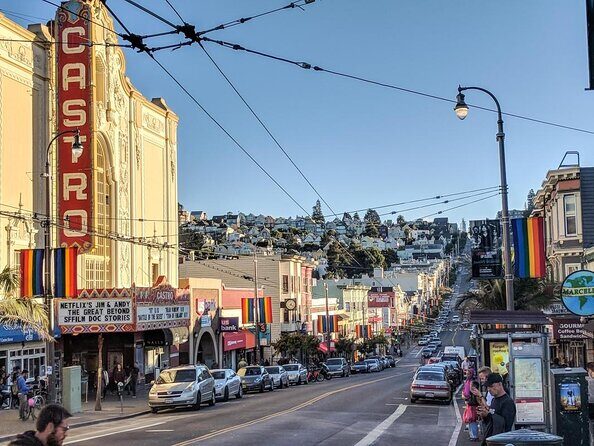
- Stop 1: The Castro and the four surrounding hills idea
- Stop 2: Tank Hill and the city’s best angles
- Stop 3: Corona Heights, cut-out streets, and stair-and-slide surprises
- Ending at Randall Museum: a memorable finish point
- Snack stop at Hot Cookie (purchase only)
- Price and value: what $65 buys you in San Francisco terms
- Pace, logistics, and what “moderate fitness” really means
- What to wear and bring for San Francisco hilltops
- Who should book this Four Peaks tour
- Should you book the San Francisco Four Peaks Tour?
- FAQ
- How much does the San Francisco Four Peaks Tour cost?
- How long is the tour?
- Where does the tour start and where does it end?
- How large is the group?
- Do I get a mobile ticket?
- Is a snack included?
- What fitness level do I need?
- What happens if the weather is bad?
- Can I cancel for a full refund?
Key highlights you should know
- Small group size (up to 8) keeps the walk feel personal and the pace friendly
- Four hilltop vistas across Eureka Valley neighborhoods, not one big view and done
- Hidden routes like secret staircases, plus concrete slides and quiet garden pockets
- Corona Heights street layout shaped by cutting through an old hill down toward Market Street
- Finish at Randall Museum so the tour ends in a memorable place, not just back on a sidewalk
Four peaks over Eureka Valley’s most changeable streets
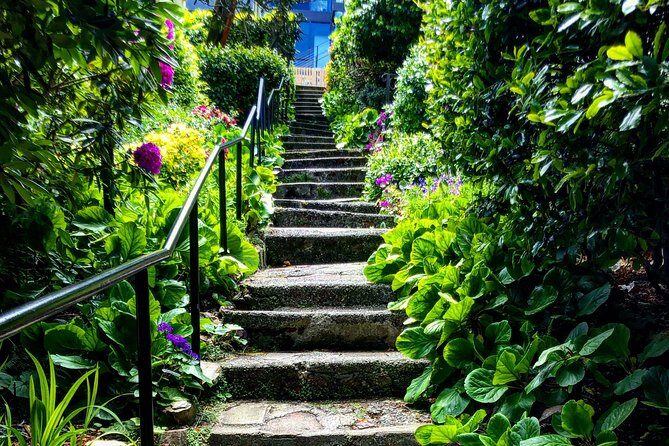
San Francisco moves in layers, and Eureka Valley is one of the clearest examples. This tour uses four surrounding hills to connect you to how the neighborhood shifted over time, from early outskirts life to later community eras. You’re not racing across town; you’re walking where the geography actually shaped the city’s story.
Think of it like this: the hills do the work. As you climb, the city keeps showing itself in new angles. As you move, you pass through places that used to be marginal edges and then became central, culturally and socially. It’s the kind of tour that makes you look up and then look closer, because both angles matter here.
You can also read our reviews of more tours and experiences in San Francisco.

Meeting at Castro St & Market St: easy to start, easy to find
The tour begins at Castro St & Market St. That matters more than it sounds, because this is a neighborhood you can reach without planning a whole transit day around it. You’ll also start your walking right in the Castro area, which helps the guide frame the broader Eureka Valley setting from the beginning.
You’ll end back at the same meeting point. That’s a practical plus if you want to keep the rest of your day flexible after the walk. It also means you’re not stuck figuring out how to get out to a far-off drop point once you’re tired.
Stop 1: The Castro and the four surrounding hills idea
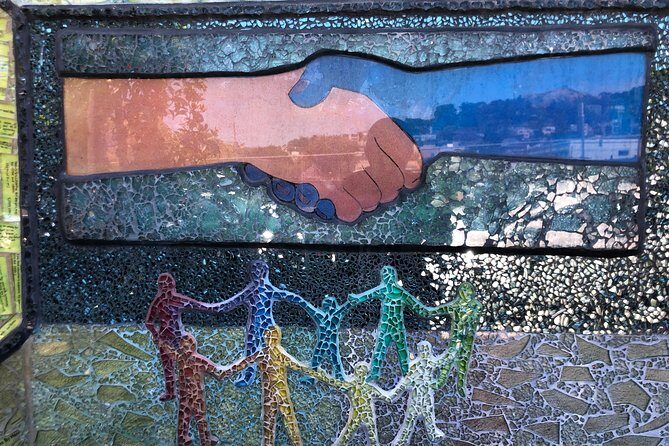
Your first stretch sets the tone. The tour focuses on the Castro while tying it to the surrounding hills that make up Eureka Valley. This is where you start hearing the big-picture version: Eureka Valley was once known as the outskirts, where Market Street’s reach stopped and cattle grazed. That kind of origin story changes how you see the modern blocks.
Then the timeline gets more specific. You’ll look at relics connected to the 1850s outskirts, and you’ll hear about the Irish community churches that show up in the neighborhood’s 1890s chapter. This is also the part of the tour where the guide helps you connect the dots between physical space and community change—especially the way some streets were abandoned in the 60s and then revived in the 70s by a flourishing gay community.
What I like here: the first hour helps you understand the neighborhood as a whole before you start chasing viewpoints.
What to watch for: if you’re expecting long museum-style history lectures, this is still a walking tour, so the history comes in vivid snapshots as you move.
Stop 2: Tank Hill and the city’s best angles
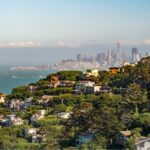
Tank Hill is one of those names that sounds dramatic because the payoff is dramatic. Here, the tour shifts from storytelling into pure visual reward. This stop is about the views—San Francisco spread out in layers as the hills slope away.
The time is short, around 40 minutes, which is exactly what makes it work. You get enough time to settle in, take photos, and listen for the context the guide offers, but you’re not trapped in a spot for so long that the rest of the tour suffers. It also means you’ll still have energy for the next climb.
One practical point: Tank Hill is a viewpoint, so expect uneven footing and a bit of wind. If you tend to get cold at overlooks, bring a light layer. And if you’re a slow walker, give yourself a few extra minutes at each stop so you don’t feel rushed.
Stop 3: Corona Heights, cut-out streets, and stair-and-slide surprises
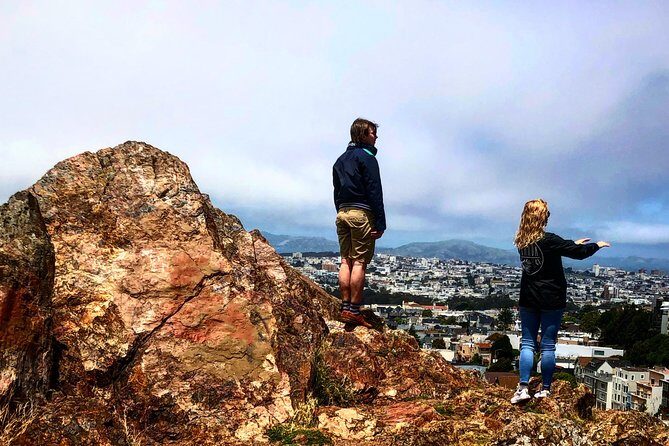
Corona Heights is where the tour gets physical in a smart way, and it’s also where you start noticing the neighborhood’s “engineering.” Corona Heights stretches between Buena Vista Park and Eureka Valley, and the streets here were literally cut out of a large hill that once covered more ground. The idea is simple but striking: the hill once extended down toward Market Street, and the neighborhood streets reflect that cut.
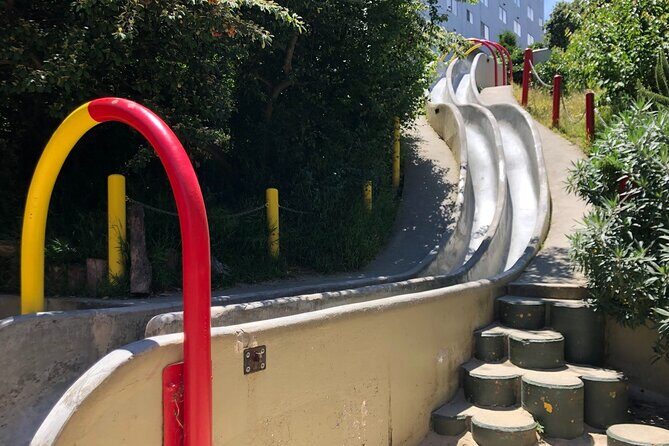
This is also where the tour leans into its more playful secrets. Along the route you’ll encounter secret staircases and hidden concrete slides. You might also pass by secluded garden pockets and a podium with a missing statue—small details that feel like you’ve found something private, even though you haven’t.
The stop runs about 40 minutes, so it stays active. You’ll likely do a mix of walking, short pauses for views, and guided explanations at specific spots. That setup is ideal for people who want history and scenery together, without spending half a day moving slowly through a single location.
Possible drawback: if you’re sensitive to stairs or rough pavement, this portion is the one to plan for. Bring shoes with real grip, not just city sneakers with smooth soles.


Ending at Randall Museum: a memorable finish point
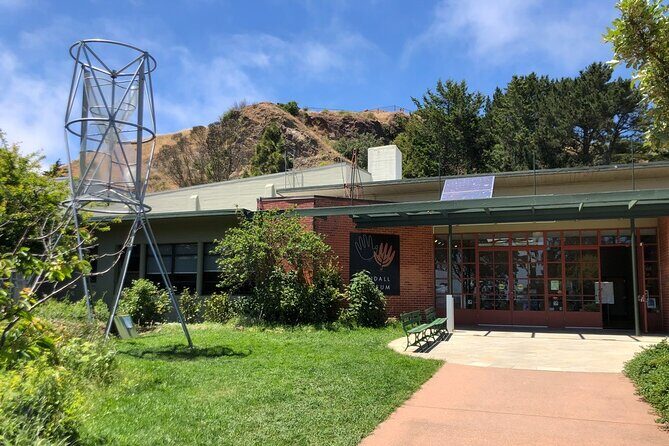
Instead of ending on a generic corner, the tour concludes at the Randall Museum at the top of Corona Heights. That ending matters because it gives the day a clear “wrap-up place.” You get one more sense of arrival—like the walk has a destination, not just a loop.
It’s also a nice contrast to the hilltops earlier in the day. Views bring you up high; the museum finish gives you a calmer endpoint where you can regroup. If you’re continuing your day in the area, you’ll feel less disoriented because the tour doesn’t strand you miles away from the start.
Snack stop at Hot Cookie (purchase only)
You’ll have a “snack stop” at the famous Hot Cookie, with food available for purchase. This is a good setup for two reasons: first, the tour is short enough that you probably won’t need a full meal break; second, you can choose what you want without being forced into a specific snack.
If you know you get hungry easily, plan to buy something right away at the stop. If you don’t, you can keep it simple with a drink or a quick treat. Either way, it’s an easy way to turn the end of the walk into a little reward moment.
Price and value: what $65 buys you in San Francisco terms
$65 for a 3 to 4 hour, small-group hilltop walk is reasonable—especially because your money goes toward a guide who can connect history, neighborhood change, and viewpoint timing. You’re also not paying extra for admission at the main stops; the experience lists each stop’s admission ticket as free.
The value shows up in how the tour uses time. Instead of spending most of the day traveling between far-flung attractions, you stay within Eureka Valley and let the hills do the “range” work for you. You get four major outlooks plus in-between story stops, all in a manageable half-day.
Where it might not feel like a bargain is if you’re the type who wants lots of downtime, long resting moments, or a slow pace that feels like sightseeing without walking. This is active touring, not couch-casual.
Pace, logistics, and what “moderate fitness” really means
The tour is best for people with moderate physical fitness. That translates into real-world expectations: hill climbs, stairs, and uneven sections. You’re also spending time standing at viewpoints, so it helps if you don’t mind being on your feet for most of the session.
The group is capped at 8 travelers. That’s a big deal for comfort in San Francisco, because small groups move faster, and the guide can stop at the right spots without losing half the group. You’ll likely feel like you’re walking with a small crew rather than being shuffled through a checklist.
Also, the tour is near public transportation, so you can connect before and after without a headache. Service animals are allowed, which is worth noting if you travel with a working animal.
What to wear and bring for San Francisco hilltops
This is one of those tours where footwear is not optional. The experience specifically calls for wearing hiking shoes, and I agree with that. You’ll cover hills, possible steps, and concrete surfaces where traction matters.
Here’s the practical kit I’d bring for this kind of walk:
- Good grip shoes with support for uneven pavement
- A light layer if it’s cool at overlooks
- Water, since you’ll be outside for several hours
- A phone with battery for photos and maps, especially since you’ll use a mobile ticket
Because the tour depends on good weather, check the forecast close to departure. If fog or heavy wind rolls in, plan for a possible change in schedule.
Who should book this Four Peaks tour
Book it if you want:
- San Francisco views from multiple hilltops in one compact experience
- A walk that ties neighborhood history to real streets you can actually see
- A guide who makes the Castro, Eureka Valley, and Corona Heights feel connected, not random
Skip it if you need:
- A fully flat walk with minimal steps
- Long, seated time with minimal uphill effort
- A tour focused mostly on one museum or single landmark
The “sweet spot” traveler is someone who likes discovery walking and doesn’t mind hills. If that’s you, this tour is a great way to see more of the city in a single half-day than you’d likely manage on your own without a route plan.
Should you book the San Francisco Four Peaks Tour?
I think it’s a solid yes for the right traveler. The strongest reason to book is the combination: four viewpoints, neighborhood storytelling, and a little sense of route-hunting with staircases, slides, gardens, and small found details. Add in the small group size and an enthusiastic guide like Ryan, and you get an experience that feels more personal than a typical big-city tour.
If you’re comfortable with moderate walking and want to see Eureka Valley from the hills that shape it, you’ll probably enjoy this a lot. If hills and stairs are a deal-breaker, choose something flatter—and save your energy for a day when San Francisco gives you easier footing.
FAQ
How much does the San Francisco Four Peaks Tour cost?
It costs $65.
How long is the tour?
The tour runs about 3 to 4 hours.
Where does the tour start and where does it end?
It starts at Castro St & Market St and ends back at the meeting point.
How large is the group?
The tour has a maximum of 8 travelers.
Do I get a mobile ticket?
Yes, the tour uses a mobile ticket.
Is a snack included?
Snacks are not included. There is a snack stop at Hot Cookie where food is available for purchase.
What fitness level do I need?
You should have a moderate physical fitness level, since the tour involves walking and viewpoints on hills.
What happens if the weather is bad?
This experience requires good weather. If it’s canceled due to poor weather, you’ll be offered a different date or a full refund.
Can I cancel for a full refund?
Yes. You can cancel up to 24 hours in advance for a full refund. If you cancel less than 24 hours before the start time, the amount paid is not refunded.