REVIEW · SAN FRANCISCO
Wharf to Golden Gate Bridge – GoRide Electric Scooter Rentals
Book on Viator →Operated by San Francisco Electric Tour Co - GPS Guided E-Scooter Rentals · Bookable on Viator
Electric scooters make San Francisco feel oddly easy. The Wharf to Golden Gate Bridge ride uses GPS guidance and onboard narration, so you’re focused on the views instead of reading street signs. I especially like the GPS-guided route that gets you out and back without fuss, even if it’s your first SF visit.
Second, I love how the ride comes with a built-in storytelling layer. You get helmet support, plus an onboard audio adventure packed with local landmarks, history, and culture as you cruise.
One thing to plan around: electric scooters aren’t allowed on the Golden Gate Bridge. Walking is OK, and the hills can ask for some extra effort depending on the scooter you choose and your comfort level.
In This Review
- GoRide in 5 minutes: what makes this SF scooter tour work
- Umbrella Alley start: quick setup before you hit the waterfront
- Wharf-to-Bridge route: how the ride stays simple (and fun)
- The Golden Gate Bridge rule: scooters don’t roll on it
- Scooter choice guide: fat tire solo vs E-trike for families
- Fat Tire Scooter (1 guest)
- E-Trike (2 guests)
- Who each option suits
- The onboard storytelling: getting meaning without homework
- Practical SF tips: daylight, gloves, and hill stamina
- Go during daylight
- Dress for cold and wind
- Expect some physical effort on hills
- Price and value: renting per scooter (not per person)
- Who this tour is best for (and who should skip it)
- Should you book GoRide Wharf to Golden Gate Bridge?
GoRide in 5 minutes: what makes this SF scooter tour work

- GPS-guided from Wharf to Bridge and back so you spend less time figuring out directions and more time riding
- Onboard audio + storytelling tour that explains what you’re seeing, including historical monuments along the way
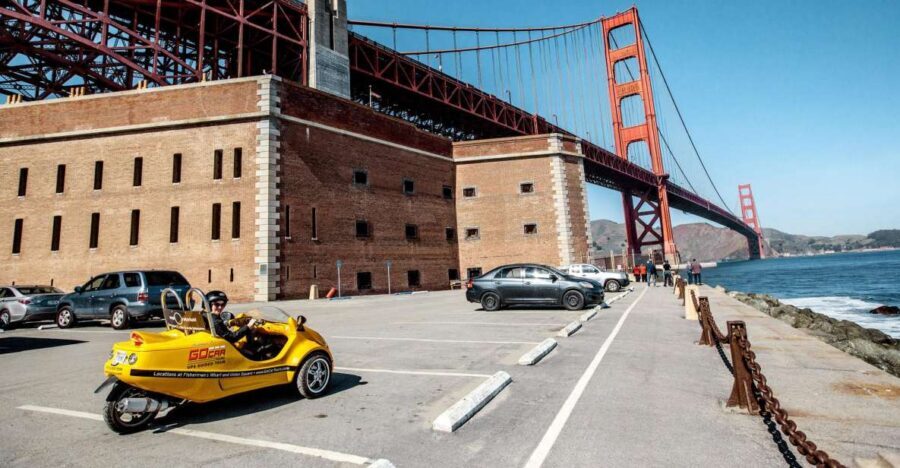
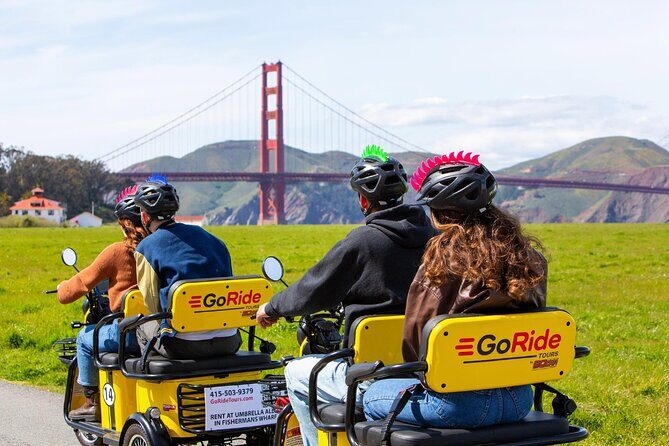
- Two ride styles: a solo fat tire scooter or a family-friendly E-trike with seating for two
- Golden Gate Bridge reality check: scooters can’t roll onto the bridge, but you can walk
- Helmet included and required, plus a liability waiver before you roll
- Hills and power assist: fat tire scooters may need some kicking; the E-trike is pedal assist but still has limits on steep slopes
Umbrella Alley start: quick setup before you hit the waterfront
Your experience begins at Umbrella Alley, 366 Jefferson St, right in the Fisherman’s Wharf area. This matters because it puts you close to the action from the first minute. You’re not starting miles away and then commuting into the city—you’re already in the neighborhood people come to see.
The tour is set up as a private activity, meaning only your group participates. That can feel like a small upgrade in comfort and timing: you’re not trying to squeeze your ride plans into a big mixed crowd.
You’ll also get the basics squared away before movement: a required helmet is provided, and you’ll sign a liability waiver. If you’re the type who hates delays, this is one of the smoother parts of the trip—most of the heavy lifting is the “how to ride and stay safe” part, not an extended waiting game.
One practical tip: if you’re sensitive to cold or wind (and who isn’t near the water), dress for it at the start. Even if SF looks pleasant in the sun, it can get chilly fast once you’re moving.
You can also read our reviews of more tours and experiences in San Francisco

Wharf-to-Bridge route: how the ride stays simple (and fun)
The core idea is straightforward: the GPS-guided tour takes you from Fisherman’s Wharf to the Golden Gate Bridge and back in about 1 hour 30 minutes. That time window is the sweet spot for SF. Long enough to feel like you actually left the tourist hub, short enough that you still have energy for food, photos, and a second plan.
Here’s what you’ll notice about the flow. Instead of stopping repeatedly to “wait for everyone,” you’re rolling through the route while the onboard system guides you. That reduces the usual city-tour pain: regrouping, losing time at intersections, and spending energy on navigation rather than seeing.
The story component is built in. As you ride, you get an onboard storytelling guided tour (and an audio adventure style explanation). I like this for two reasons:
- It helps you understand what you’re looking at without having to stop and research.
- It keeps the ride feeling purposeful, not just a scooter cruise.
You’ll get ample description of historical monuments during the drive, which is exactly what makes this tour feel like more than transport. You’re learning while you’re moving, which is one of the best ways to experience San Francisco—especially when you’re limited on time.
The Golden Gate Bridge rule: scooters don’t roll on it
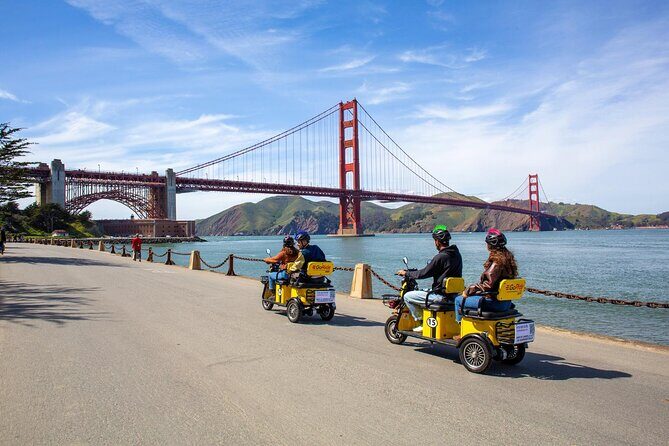
This is the big “know before you go” point. Electric scooters are not allowed on the Golden Gate Bridge, but walking on the bridge is OK. That means your experience at the bridge is a mix of riding and switching gears.
In practice, you should expect to arrive near the bridge area and then spend time on foot at least for part of the experience. This is actually a good thing. Walking lets you slow down for photos and take in the bridge as a real landmark, not a blur you zip past.
Why this matters: if your goal is a one-button ride straight onto the bridge, the rules won’t match that fantasy. If your goal is seeing the bridge while still enjoying an electric scooter for the city leg, this tour fits nicely.
Also, note the “SF wind logic.” When you’re near the water and bridge approach, it can feel colder and gustier than inland. If you’re going in cooler months, gloves are a smart idea.
Scooter choice guide: fat tire solo vs E-trike for families
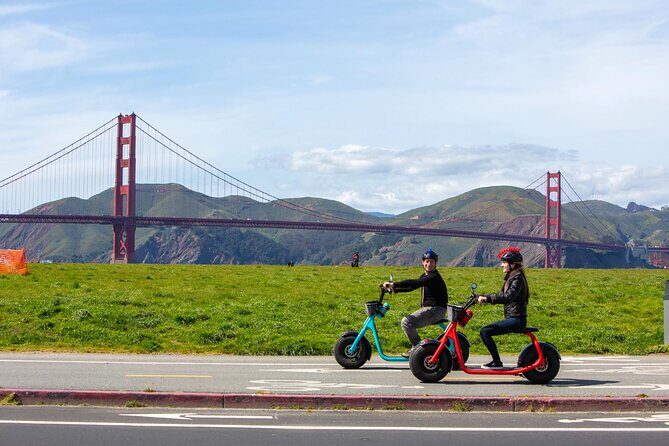
GoRide offers two main ride types, and choosing the right one can make or break your comfort level.
Fat Tire Scooter (1 guest)
This is the solo option with one rider seat and a maximum weight capacity of 300 lbs (126 kg). The fat tires help with comfort on less-than-perfect pavement, which is great because San Francisco’s sidewalks and streets can be a mix of smooth and uneven.
The hill note is important. On some slopes, you may need a bit of a kick to maintain momentum. That doesn’t mean it’s hard—but it does mean you shouldn’t expect pure “set-and-forget” power on every incline.




E-Trike (2 guests)
The E-trike is the two-seater. It has pedal assist, which can feel more natural because you have a physical rhythm to help you keep moving uphill.
Weight limits still apply: 300 lbs (126 kg) maximum on either the fat tire scooter or the E-trike.
The power assist has limits on steep slopes, especially for heavier guests. If the slope is too much, you might still need to pedal more actively. Plan for that. It’s not a dealbreaker—it’s just realistic.
Who each option suits
- If you’re riding solo or don’t mind being the only rider, the fat tire scooter is the simplest match.
- If you’re traveling with a partner or a family unit, the E-trike makes the experience feel more like shared sightseeing and less like taking turns.
Age-wise, scooter drivers must be 18+. Also, single passenger on the E-trike is age 5+. The E-trike option can accommodate configurations described as 2 adults or 1 adult and 2 small children ages 5+, depending on how the seating is used.
The onboard storytelling: getting meaning without homework
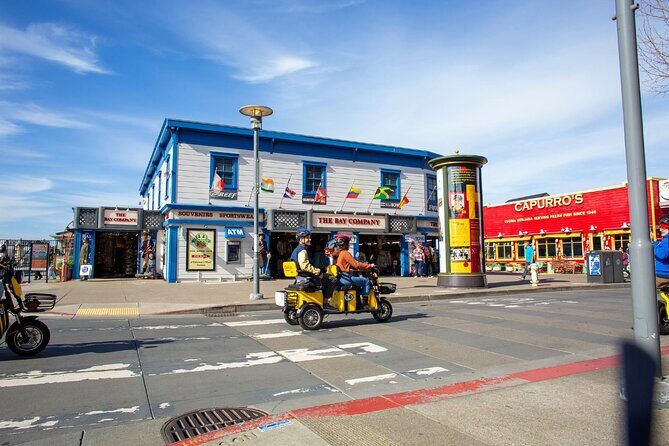
One of the best perks here is that the scooter doesn’t just move—you’re guided. The tour includes onboard storytelling and audio information about the city’s history, culture, and secrets.
This is where I think the value really hides. When you roll through an area like Fisherman’s Wharf and toward the bridge, your eyes catch big icons, but you don’t automatically get context. The audio layer fills that gap while you’re already in motion.
A practical bonus: it reduces decision fatigue. Instead of you trying to guess which landmarks are “worth noticing,” the narration points your attention in the right direction. That’s especially helpful if you’re short on time or you’re not the type who wants to stop at every corner.
The tone seems designed for a ride experience—information that’s easy to take in while you’re not stationary. And because you’re covering ground, each topic lands with the visuals you need.
Practical SF tips: daylight, gloves, and hill stamina
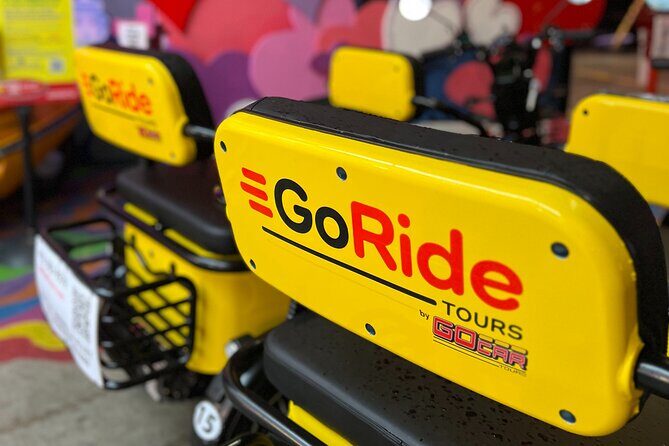
This is San Francisco, so the “gotchas” tend to be less about the technology and more about the environment.
Go during daylight
If you’re choosing a time, I recommend daylight. Riding can feel a bit scary at night, especially if you’re new to scooter control and the streets are harder to read quickly.
Daylight also makes the audio and scenery better. You’ll be able to spot details worth knowing, instead of just hearing about them.
Dress for cold and wind
Bundle up. Even if the start feels mild, the ride shifts closer to open water and can get chilly. Gloves are a smart call in cooler seasons.
Expect some physical effort on hills
The tour is designed so no prior scooter experience is necessary, but it’s still an active outing. You should have moderate physical fitness. That doesn’t mean “athlete only.” It means being comfortable with short bursts of effort—especially because of the hill guidance:
- Fat tire scooters may need a kick to keep momentum.
- E-trikes offer pedal assist, but motors are not strong enough for all slopes if you’re at the heavier end of the weight range.
If you know your body runs cold or you dislike exertion, pick the ride type that matches your comfort, and plan a steady pace.
Price and value: renting per scooter (not per person)
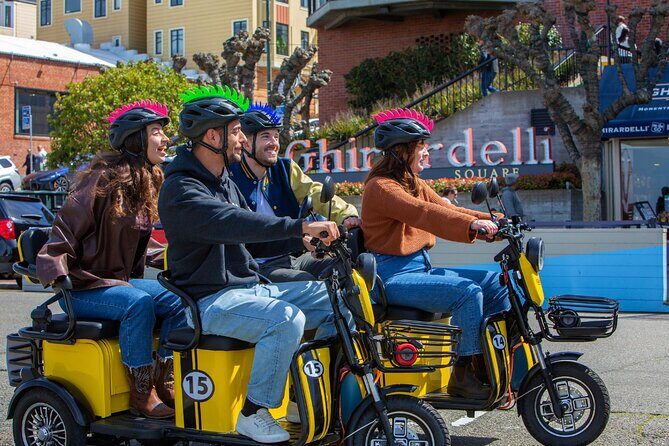
GoRide pricing works like this: the listed cost is the rental price per E-scooter or E-trike, not per person. So 1 person equals 1 scooter rental.
That can be great value if you’re traveling solo. It can also be good value for groups if you split into compatible riders:
- Solo traveler: one fat tire scooter rental
- Two adults or a small family: one E-trike rental
What you’re getting for the rental price:
- Helmet included (required)
- Onboard storytelling guided tour
- GPS guidance from Wharf to Golden Gate Bridge and back
- A setup meant to avoid typical transit/parking headaches
Because scooters aren’t allowed on the bridge itself, you don’t get the full “ride onto the icon” fantasy. But you do get the practical side of the SF experience: you arrive near the bridge without draining your feet, and then you can enjoy the bridge on foot where it makes sense.
Who this tour is best for (and who should skip it)
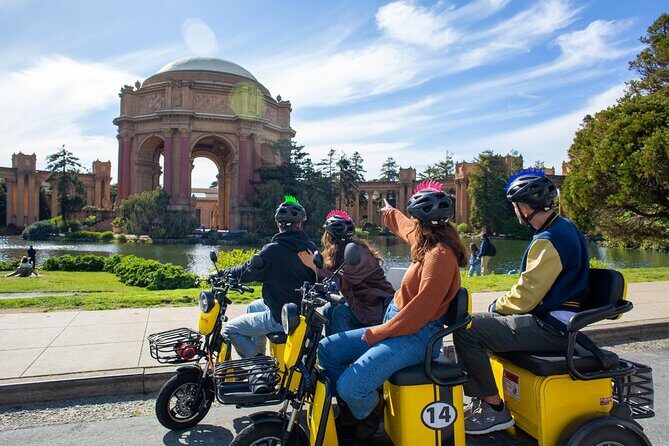
This tour shines if you want an SF experience that’s part sightseeing, part learning, and part energy-saver. It’s ideal for:
- First-time visitors who want structure and fewer wrong turns
- People who like moving at their own pace but still want context
- Couples and small groups who can share an E-trike
- Anyone who wants to see the Golden Gate Bridge area without doing a long, purely on-foot day
You might want to look at alternatives if:
- You’re expecting to ride the scooter directly onto the bridge roadway for the entire crossing (the rules won’t allow it)
- You’re uncomfortable with hills or wind (the ride involves slopes and an outdoor waterfront)
- You don’t like daylight sightseeing and you’re set on night plans (daylight is recommended for comfort)
Should you book GoRide Wharf to Golden Gate Bridge?
Book it if you want the best of both worlds: an electric ride with GPS guidance and an audio layer that makes the scenery make sense. If you’re time-crunched but still want the bridge in your day, this is a smart way to pack a lot into about 1 hour 30 minutes.
Think twice if your dream day is all “ride everything, never get off.” This one asks you to switch to walking at the bridge area. If you can accept that and you’re dressed for SF weather and hills, you’ll get a smooth, fun, San Francisco-style outing.