REVIEW · SAN FRANCISCO
San Francisco : Mission and Castro districts tour in French
Book on GetYourGuide →Operated by San Francisco Off Road · Bookable on GetYourGuide
Two neighborhoods, one standout story. This French tour links Castro LGBT landmarks with the Mission murals, so you understand San Francisco beyond the postcard.
I especially like the way it mixes street-level details—Victorian facades, neighborhood landmarks, and architecture you can actually point to—with art stops like Clarion Alley. And because it’s guided in French, you get the context without having to work for it.
The only catch: it runs rain or shine, and drinks aren’t included, so pack a water bottle and a light layer if the weather looks moody.
In This Review
- Key highlights at a glance
- Two Neighborhoods, Two Meanings: Castro Meets the Mission
- Meeting Point and Timing: 3 Hours That Don’t Wander
- Castro Highlights: Rainbow Flag, Harvey Milk Plaza, and the Castro Theatre
- Mission Transition: Victorian Houses and the Maxime le Forestier Blue House
- Mission Dolores and the Latin Quarter: Murals, Palm-Lined Dolores Street, and Women’s Building
- Valencia Street for Real Life: Taquerias, Thrift Shops, and Independent Books
- Liberty Hill District Architecture: Cottages to Victorian Mansions
- Dolores Park Finale: A San Francisco View That Lands
- French-First Guidance: Small Group, Real Names, and Storytelling
- Price and Value: What $65 Gets You in 3 Hours
- Who This Tour Fits Best (and Who Might Want Another Option)
- Final Verdict: Should You Book This Castro + Mission Tour?
- FAQ
- What language is the tour offered in?
- How long is the tour?
- How big is the group?
- Where does the tour start and end?
- Is the tour affected by weather?
- What is included in the price?
Key highlights at a glance
- Castro’s Rainbow Flag and LGBT landmarks with Harvey Milk Plaza as a focal point
- Mission Dolores and the oldest Mission-era anchor to ground the neighborhood story
- Street art you can see from the sidewalk, including the big mural at the Women’s Building and Clarion Alley
- Victorian houses and specific architectural references, including a blue house tied to Maxime le Forestier
- Valencia Street local life, from Mexican taquerias to thrift shops and independent bookstores
- Dolores Park viewpoints to end with a clear city perspective
Two Neighborhoods, Two Meanings: Castro Meets the Mission
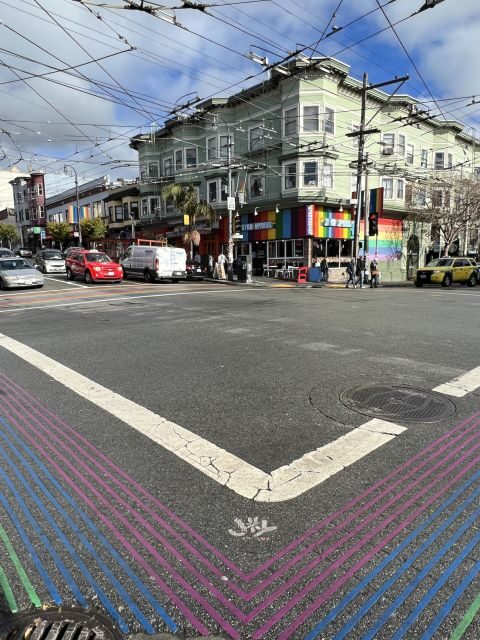
San Francisco can feel like it changes its personality every few blocks. That’s exactly what I like about pairing Castro and the Mission in one 3-hour outing. You start in a district closely associated with the city’s LGBT community and then move into the Mission’s older Hispanic roots, where art, food, and everyday street life take the lead.
The Castro side gives you names and places that explain why this neighborhood became a symbol. The Mission side, by contrast, shows how culture sticks to walls, storefronts, and backstreets: murals, graffiti, and old architecture that still shapes what you see today.
You can also read our reviews of more tours and experiences in San Francisco.
Meeting Point and Timing: 3 Hours That Don’t Wander
You meet at Cafe de Casa, then the tour keeps a brisk but friendly rhythm. It’s designed for a small group—up to 10 people—so the guide can actually talk, point, and answer questions without the crowd feeling like a moving bus.
The schedule is split into two main blocks of roughly equal time: one focused on the Castro and one focused on the Mission. You finish at Mission Dolores Park, where you get a classic San Francisco “so this is the city” view.
Because it’s rain or shine, it helps to come prepared to walk comfortably for the full session. And since beverages aren’t included, I’d treat this as a walking tour where you plan your hydration before you start.
Castro Highlights: Rainbow Flag, Harvey Milk Plaza, and the Castro Theatre
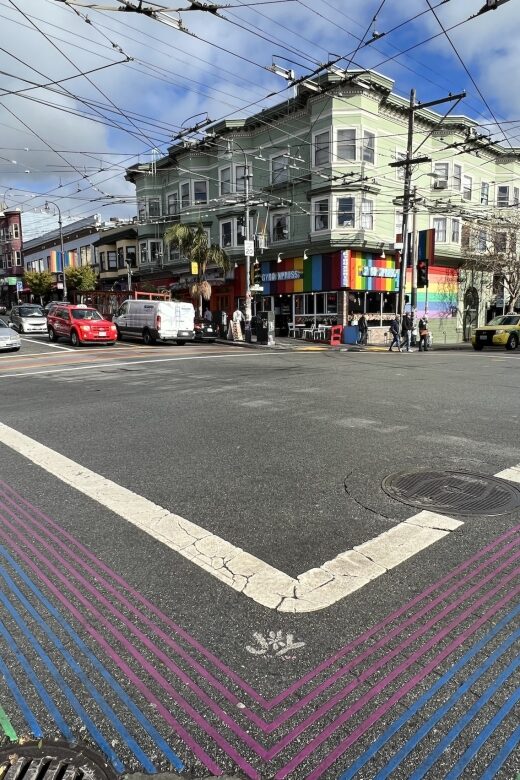
The Castro portion is the most instantly recognizable part of the tour. You can literally see when you’ve arrived thanks to the Rainbow Flag, the giant signal that the neighborhood is proudly itself.
From there, your guide focuses on landmarks tied to LGBT history, including Harvey Milk Plaza. You’ll also hear about the Castro Theatre and the former photo store connected to America’s first openly gay elected official. Even if you know the headline-level story, the point here is how these places became part of the neighborhood identity—through activism, community visibility, and public memory.
Photo stops matter on this tour. The guide builds little “look here” moments so you connect what you see with what you’re hearing. That’s a big reason this district feels more personal than just reading facts afterward.
Mission Transition: Victorian Houses and the Maxime le Forestier Blue House
Once you start moving toward the Mission, the vibe shifts. Instead of the Castro’s dramatic landmarks, you get a more layered streetscape: architecture, murals, and the kind of neighborhood texture you’d miss if you only passed through.
One of the standout ideas you’ll get during this transition is Victorian houses—and not just as pretty buildings, but as a clue to how San Francisco grew. The tour also calls out a specific reference tied to Maxime le Forestier’s song about a blue house, and you’ll see that kind of detail in front of you. It’s one of those moments that feels small, then suddenly makes the neighborhood feel curated by real life, not by a brochure.
Expect your guide to point out wall art and building features while you’re walking. This is where the tour starts rewarding you for paying attention to street level.
Mission Dolores and the Latin Quarter: Murals, Palm-Lined Dolores Street, and Women’s Building
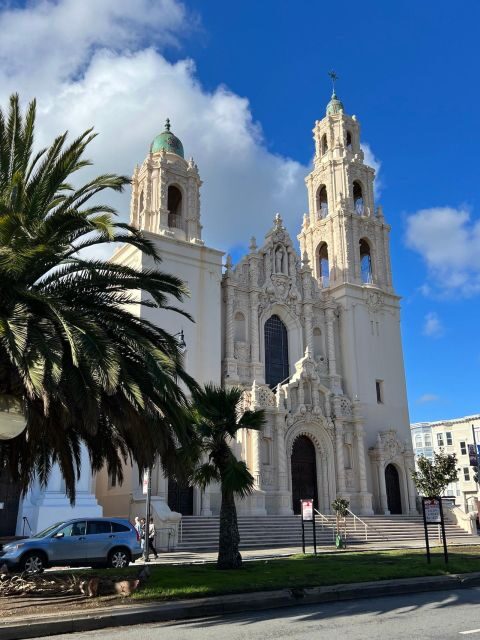
To ground the story of the Mission, the tour includes Mission Dolores, the city’s oldest building. That stop is important because it gives the neighborhood a timeline you can feel. When you later see the art and the street life, you understand it isn’t just decoration—it’s part of a longer, changing community.
After that, you move down Dolores Street, lined with palm trees, which helps shift you from history to daily rhythm. Then the focus becomes street art in the Latin Quarter area.
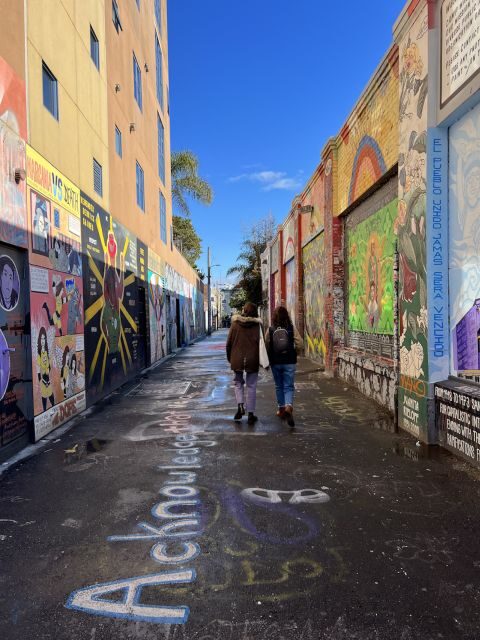
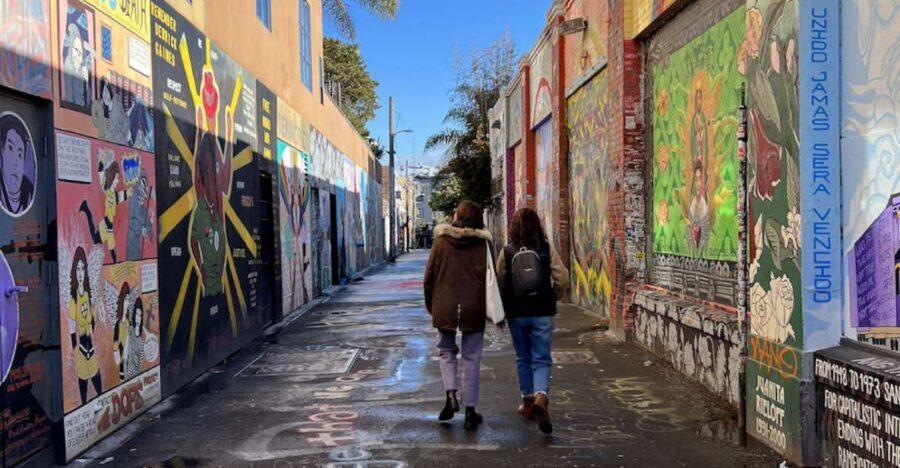
Two stops anchor this part: the giant mural at the Women’s Building and the urban graffiti in Clarion Alley. Even if you’re not an art-history person, you’ll still appreciate how these murals create an outdoor gallery. The guide’s job is to translate what you’re seeing—why certain messages appear, how communities use walls, and how art becomes a public language.
This section is often the one people remember afterward because the visuals hit fast. The context keeps those visuals from turning into random pictures.

Valencia Street for Real Life: Taquerias, Thrift Shops, and Independent Books
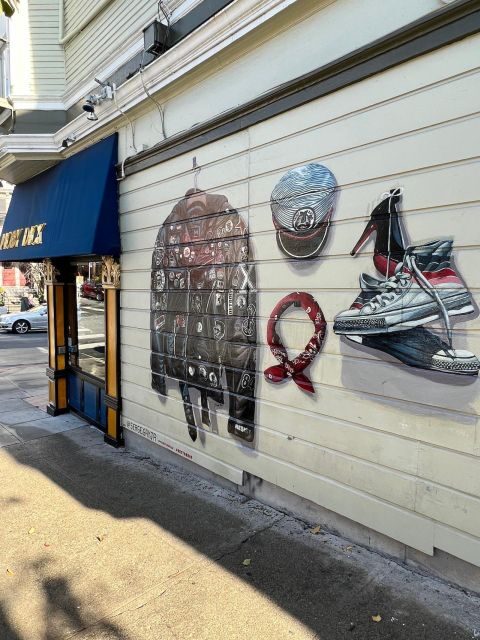
Next comes Valencia Street, where the tour leans into what the neighborhood feels like today. This isn’t just sightseeing. It’s where you start noticing the practical stuff: where people eat, where they shop, and how the storefront mix reflects the neighborhood’s personality.
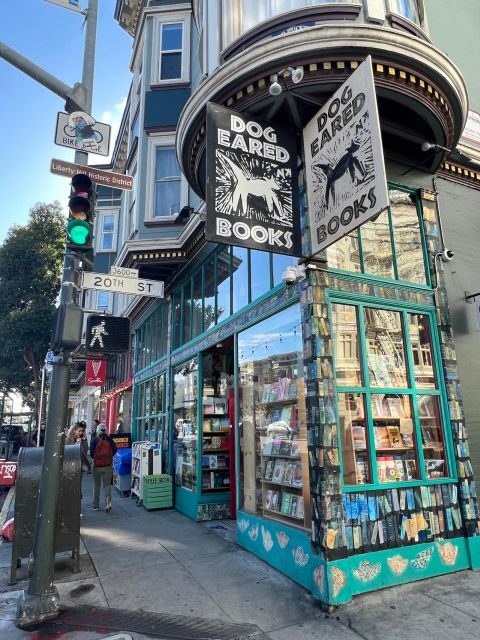
You’ll pass spots like Mexican taquerias, thrift shops, and independent bookstores. The guide doesn’t turn this into a shopping directive, but the “look around” approach helps you understand how Valencia works as a local corridor—not just a place for photos.
If you like the idea of learning a neighborhood by its everyday habits, this is a strong inclusion. If you prefer only major sights, you may find this part slower. But it’s valuable because it shows what visitors often miss: the street economy that keeps a district alive.
Liberty Hill District Architecture: Cottages to Victorian Mansions
Near the end, you explore the Liberty Hill District, described as San Francisco’s first suburb. This is a smart shift, because it balances the art-and-identity theme with architecture and urban growth.
Here, the tour asks you to look at the variety of home styles, from simpler cottages to Victorian mansions. One called-out example is the John McMullen House, which gives you a concrete reference point while you’re walking through the residential character of the area.
I like this segment because it prevents the tour from feeling like only cultural landmarks. Instead, you get a sense of how the city’s form—especially housing styles—shapes what it feels like to move through these neighborhoods.
Dolores Park Finale: A San Francisco View That Lands
The tour ends with a payoff: the top of Dolores Park for a broad view. You’ll see the city spread out, including the distant downtown skyscrapers.
This stop is more than a final photo moment. It helps your brain connect the dots. After hours of Castro history, Mission street art, and architectural references, the skyline view gives you a spatial understanding. You start to see the city as a system, not just a set of separate stops.
It’s also a good place to reset. If you’re doing this tour later in the day, this viewpoint can help you decide what to explore next on your own.
French-First Guidance: Small Group, Real Names, and Storytelling
The tour is in French, and that matters because it changes the type of questions you’ll ask and the details you’ll catch. A small group—up to 10 people—also keeps the experience from turning into one-way lecturing.
From past groups, guides such as Jeremy and Lillian are specifically noted for making the history and anecdotes feel natural and enjoyable. One review even highlighted that it worked well with both adults and children, which tells me the guide pacing is friendly and not overly heavy.
If you want San Francisco history taught through streets and landmarks, this kind of guided format is ideal. If you’re comfortable with French conversation, you’ll get more out of the tour than you would with short translations.
Price and Value: What $65 Gets You in 3 Hours
At $65 per person for a 3-hour outing, the value comes from several practical elements working together.
First, you get two neighborhoods that are easy to mix up on your own: Castro and the Mission. You’re not just checking boxes; you’re learning why each area matters and how the street details connect to the broader story.
Second, the group stays small, so you can actually hear the guide and follow along. Third, it includes a map of the visited places with the guide’s suggested addresses, plus an email after the visit that reminds you what you saw and includes a souvenir photo.
The only thing you’re truly missing is the convenience factor of drinks, since beverages aren’t included. I’d bring water, especially because the tour runs rain or shine, meaning you can’t count on a sudden cafe stop to solve comfort needs.
Overall, $65 feels fair for a French-guided neighborhood walk that combines history, art, and architecture without turning into a long day.
Who This Tour Fits Best (and Who Might Want Another Option)
This tour is a strong match if you want San Francisco through the lens of neighborhood identity—especially LGBT community history, street art, and Victorian architecture. It’s also a good pick if you like learning while you walk, rather than sitting through a museum-style experience.
It’s also great for people who already have a bit of interest in Castro and the Mission, but don’t want to spend your first day building context from scratch.
You might look for something else if you prefer purely scenic viewpoints with minimal cultural explanation. This one has a story focus, and the guide will spend real time on history and meaning, not just angles and photos.
Final Verdict: Should You Book This Castro + Mission Tour?
I’d book this if you want a guided, French-language way to understand two of San Francisco’s most influential neighborhoods in just 3 hours. The mix of Castro LGBT landmarks, Mission street art sites like Clarion Alley, and architecture references like the Maxime le Forestier blue house gives you a memorable hit of the city’s real character.
Bring water, plan for weather, and wear shoes you trust. Then show up ready to look at walls, houses, and street corners like they mean something. This tour does.
FAQ
What language is the tour offered in?
The tour is guided in French.
How long is the tour?
It lasts 3 hours.
How big is the group?
The group is small, limited to up to 10 participants.
Where does the tour start and end?
It starts at Cafe de Casa and finishes at Mission Dolores Park.
Is the tour affected by weather?
The tour runs rain or shine.
What is included in the price?
A French-speaking guide is included, along with a map of the visited places with suggested addresses, and an email after the visit with a reminder and a souvenir photo.