REVIEW · SAN FRANCISCO
San Francisco Castro Mission Loop Tour
Book on Viator →Operated by Roam Local · Bookable on Viator
Street corners tell better stories on foot. This Castro–Mission loop tour takes you off the main sights into San Francisco neighborhoods with a small-group feel (capped for a more personal experience).
I especially love the way the guide brings the Castro and Liberty Hill to life, with Ryan sharing city lore, humor, and real context. You also get the Mission’s texture—murals in the Alley of Murals, plus Victorian streets—so the walk feels like it has a point, not just moving from photo spot to photo spot.
One consideration: this is a walking route with hills, so come with moderate stamina and wear grippy shoes. It also runs best in good weather, so keep an eye on conditions.
In This Review
- Quick Hits Before You Go
- Castro Street to Liberty Hill: Where the Castro Tour Starts
- Mission District: Murals, Buried Lagoon, and Victorian Blocks
- Why the Loop Feels Personal: Small Group and a Story-Driven Guide
- Price and Value: What $65 Buys You in Real Walking Time
- Getting Ready: Hills, Walking Comfort, and Weather Reality
- What You’ll See (and Why It’s Worth Seeing Twice)
- Who Should Book the Castro–Mission Loop?
- Should You Book This Tour?
- FAQ
- How long is the Castro Mission Loop Tour?
- What does the tour cost?
- Where does the tour start?
- Where does it end?
- What neighborhoods are covered?
- Is the tour offered in English?
- What’s included in the price?
- Are there any entrances or admissions fees?
- Are snacks included?
- What fitness level do I need?
Quick Hits Before You Go
- Small-group energy: capped at 12 for a close-feel tour, and it can run with up to 8 travelers.
- Two neighborhoods, one loop: Castro + Liberty Hill, then the Mission District.
- Culture told on the street: you learn through stories about what you’re seeing, not just dates.
- Mission visuals you can’t fake: murals in the Alley of Murals and distinctive architecture.
- Free on-paper entrances: stops are listed as free, so you’re not adding museum ticket costs.
- Walks include climbs: expect a workout, including hill walking and lots of looking up.
Castro Street to Liberty Hill: Where the Castro Tour Starts
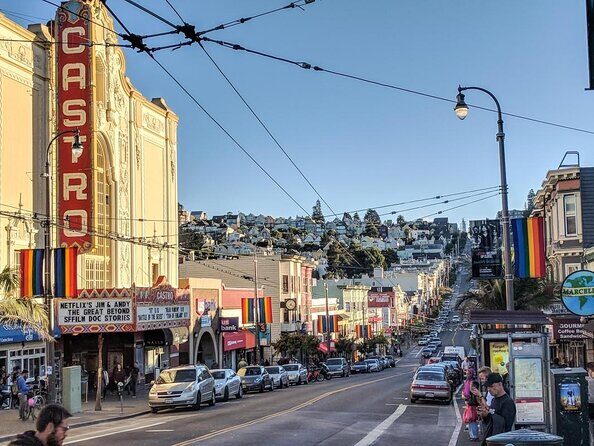
The meeting point is Castro Street & Market Street, right where you can get oriented quickly before you head into the quieter texture of the area. From the start, the tour’s style is practical: you move at a walking pace that lets you actually notice details, and your guide connects those details to the neighborhood’s culture.
In the Castro, you’ll spend about 1 hour 30 minutes focused on the Castro District, including the Castro Theatre area and Liberty Hill. The best part is how the guide frames what you’re seeing. It’s not just identifying buildings. It’s explaining why these blocks matter and how the neighborhood’s identity shows up in streets, architecture, and community life.
The Castro stop is also a good reset if you’ve been stuck in downtown sightseeing mode. Here, the walk shifts from skyline views to something more human—street-level character, storefronts, and residential blocks. Even if you think you already know the basics of the Castro, this kind of tour tends to make the area feel more specific and local. One review favorite was the guide’s animated storytelling, with plenty of detail and humor that keeps you engaged as the street turns and the walk continues.
Also, expect the kind of walking where you’ll glance down at your footing and then look up again for the architecture. One review noted that the tour includes climbs and things like secret stairs and interesting residential gardens. If that’s your type of exploring, you’ll probably enjoy the Castro portion as much for the choreography of the walk as for the destination.
You can also read our reviews of more tours and experiences in San Francisco.



Mission District: Murals, Buried Lagoon, and Victorian Blocks
After the first half, you shift into the Mission District for another 1 hour 30 minutes. This second stop is designed to show you how the Mission reads at street level: artwork, everyday storefront life, and architecture mixed together in a way that feels lived-in rather than staged.
You’ll hit the Alley of Murals, plus time around restaurants, Buried Lagoon, and Victorian architecture. That combination is smart because it keeps the tour from being one-note. Murals are the headline, sure, but the guide also helps you connect the art to the neighborhood’s layout and character. And when you move from murals into architecture and nearby points of interest, the neighborhood stops feeling like a single attraction and starts feeling like a place you could wander for hours.
The Buried Lagoon mention is especially intriguing. It signals that you’re not just ticking off Instagram scenes. You’ll be walking through an area with a layer of history tied to how the neighborhood developed and how the natural features were handled over time. If you like urban stories—how cities change and what gets covered up—this kind of stop gives you a payoff that’s more than just visual.
Victorian architecture can be easy to miss if you’re rushing. Here, you get time to notice details: shapes, facades, and the way homes and storefronts sit along the street. In the reviews, this was a standout theme: the guide described plants and homes, and didn’t treat architecture like trivia. Instead, it becomes a clue to how people lived and what the neighborhood valued.
One more practical note: the Mission portion tends to include more hill walking, and you’ll likely work up a sweat. Bring water in your day bag (even though snacks aren’t included, you’ll find options), and plan to pause when the guide does, so you don’t miss the visual explanations.
Why the Loop Feels Personal: Small Group and a Story-Driven Guide
What makes this tour worth your attention isn’t just the neighborhoods—it’s the way they’re taught. This is a small-group experience, capped for a personal feel, and that matters because it changes the whole dynamic. In a group that stays small, the guide can slow down when a question pops up and can point out details quickly enough that everyone can see.
The top praised element across the experience is the guide’s ability to make the city feel like a living place. Ryan comes up again and again in the feedback for being engaging, detailed, humorous, and clearly invested in the area. That’s a big deal on a walking tour. You’re basically sharing time with a local storyteller, and you want that storyteller to care—because you’ll see more when your guide cares.
Another practical benefit of a smaller group: your walking pace stays consistent. There’s less waiting around, and you’re more likely to keep momentum. That might sound minor, but over 3–4 hours, it turns into comfort. You spend more time learning and looking, and less time stopping for logistics.
This also explains why the itinerary works as a loop. You start in the Castro, pivot into the Mission, and your guide can connect themes between the two. Even when the neighborhoods feel different, you can start noticing shared threads—community identity, how architecture signals eras, and how public art changes what a block communicates.
If you’re the kind of traveler who likes context more than trivia—if you’d rather understand why a place feels the way it does than just see it—this loop style is a strong fit.
Price and Value: What $65 Buys You in Real Walking Time
At $65 per person for 3 to 4 hours, this isn’t a budget crawl, but it also isn’t an upscale splurge. You’re paying for guide time, local storytelling, and a structured walk that helps you see more than you would on your own.
The value angle is clearer when you look at what’s included:
- All fees and taxes are covered.
- Stops are listed with free admission for what you’ll see.
- You get a custom experience option if you want to tailor your interests.
That last part matters more than it sounds. Many tours are rigid. A customizable approach means you can nudge the guide toward what you care about most—architecture, neighborhood history, street art context, or how people actually use the streets today.
Also, the small-group cap helps justify the price. You’re not paying for a massive group where your questions die in the shuffle. You’re paying for a focused walk where details land.
The one extra cost to consider: snacks aren’t included, though you can buy them at local favorites during the day. If you’re sensitive to sugar dips during long walks, plan to grab something simple on your own so you don’t cut the tour short.
In short: $65 feels fair when you want a guide who can explain what you’re seeing and keep the walk moving at a human pace.
Getting Ready: Hills, Walking Comfort, and Weather Reality
You should plan for moderate physical fitness. That phrase is doing a lot of work here, because the Castro and Mission both have elevation changes, and one review specifically calls out that you’ll climb many hills and see viewpoints from the walking route.
So treat this like a walking day, not a casual stroll:
- Wear shoes with grip.
- Bring a layer for fog and wind; San Francisco weather can shift fast.
- Consider a small day bag with water.
Weather matters too. The experience notes that it requires good weather, and if it’s canceled due to poor weather, you’ll be offered a different date or a full refund. The key point for you: don’t schedule this as your one rainy-day backup. It’s best when conditions are right for steady walking.
If you’re traveling with limited mobility, this might be challenging. You don’t have to be an athlete, but you should be able to keep going on uneven streets and uphill stretches without needing frequent breaks.






What You’ll See (and Why It’s Worth Seeing Twice)
The Castro and Mission don’t just offer different visuals; they offer different ways of reading the city.
In the Castro, the tour points your eyes toward how community identity shows up in landmarks like the Castro Theatre and in the quieter edges of the neighborhood around Liberty Hill. In the Mission, you’re trained to look for layered meaning—murals with context, architecture with clues, and a place like the Buried Lagoon that signals there’s more going on under the surface.
One more detail from the experience feedback: people loved the “out of the way places” feel. That’s not guaranteed on every day, but it’s exactly the kind of benefit you want from a local guide. You get to see more than just the most obvious stops, which means you come away feeling like you understood the neighborhoods instead of just passing through them.
If you want a quick way to judge whether this will work for you, think about this question: do you want pictures, or do you want to understand the story behind the pictures? This tour leans hard toward understanding.
Who Should Book the Castro–Mission Loop?
This tour is ideal if you:
- Like neighborhood walking tours that teach culture and history through what you see.
- Want a guide who tells stories with energy and humor.
- Enjoy street art, architecture, and the small details that make a place feel specific.
- Prefer small-group attention over hearing explanations at arm’s length.
It’s also a solid choice if you’re staying in or near downtown and want a focused way to connect two major San Francisco neighborhoods without planning a route yourself.
If your ideal day is mostly museums, this might feel a little more physical than you want. But if you like cities best on foot—with plenty of looking up—this is the kind of experience you’ll remember.
Should You Book This Tour?
If you want an organized, story-driven way to experience the Castro District and Mission District together, I’d book it. The biggest reason is the guide style: you’re paying for someone who clearly knows the city and communicates it in a way that keeps you engaged, even while walking uphill.
Book this if you’re comfortable with hills and you enjoy murals, street-level architecture, and neighborhood context. Skip it if you want a low-effort stroll or if you’re hoping for a mostly indoor, flat walking plan.
FAQ
How long is the Castro Mission Loop Tour?
It runs about 3 to 4 hours.
What does the tour cost?
The price is $65.00 per person.
Where does the tour start?
It starts at Castro Street & Market Street (Castro St & Market St, San Francisco, CA 94114).
Where does it end?
It ends back at the meeting point.
What neighborhoods are covered?
You’ll visit the Castro (including Liberty Hill and the Castro Theatre area) and the Mission District.
Is the tour offered in English?
Yes, it’s offered in English.
What’s included in the price?
The tour includes all fees and taxes.
Are there any entrances or admissions fees?
Admission tickets for the listed stops are free.
Are snacks included?
No. Snacks are not included, but you can buy them at local favorites.
What fitness level do I need?
You should have moderate physical fitness level, since it’s a walking tour with hills.