REVIEW · SAN FRANCISCO
Grace Cathedral: Explore the Beauty (Entry + Self-Led Tour)
Book on GetYourGuide →Operated by Grace Cathedral · Bookable on GetYourGuide
San Francisco feels like church and city at once. I love the stained glass and labyrinths here because they turn a quick visit into a calm, move-at-your-own-pace experience. I also like the way Grace Cathedral blends famous religious art with big-name secular works, so the building feels alive in the modern world.
One thing to consider: this is a self-guided ticket, so if you’re craving a guided talk, you’ll have to read the displays yourself.
In This Review
- Key things I think you’ll notice right away
- Grace Cathedral on Nob Hill: What You’re Really Walking Into
- The self-guided tour hour: how to make it feel like more than entry
- Gothic highlights: stained glass, organ, and the labyrinths
- Ghiberti doors and the Interfaith AIDS Chapel
- Religious and secular art: Keith Haring, David LaChappelle, and Ansel Adams
- San Francisco history you can actually point to
- Where to enter and how the accessible route works
- Price and value: is $14 worth your time?
- Who should book this ticket?
- Should you book Grace Cathedral entry?
- FAQ
- How long does the Grace Cathedral entry and self-guided visit take?
- What is included with the ticket?
- Is the self-guided tour available in multiple languages?
- Are there children’s activities?
- Where is the cathedral entrance and meeting point?
- Is the cathedral wheelchair accessible?
- What are the key highlights inside the cathedral?
- Can I take photos with a flash?
- Is Grace Cathedral a church?
- Does the ticket support the cathedral’s mission?
Key things I think you’ll notice right away
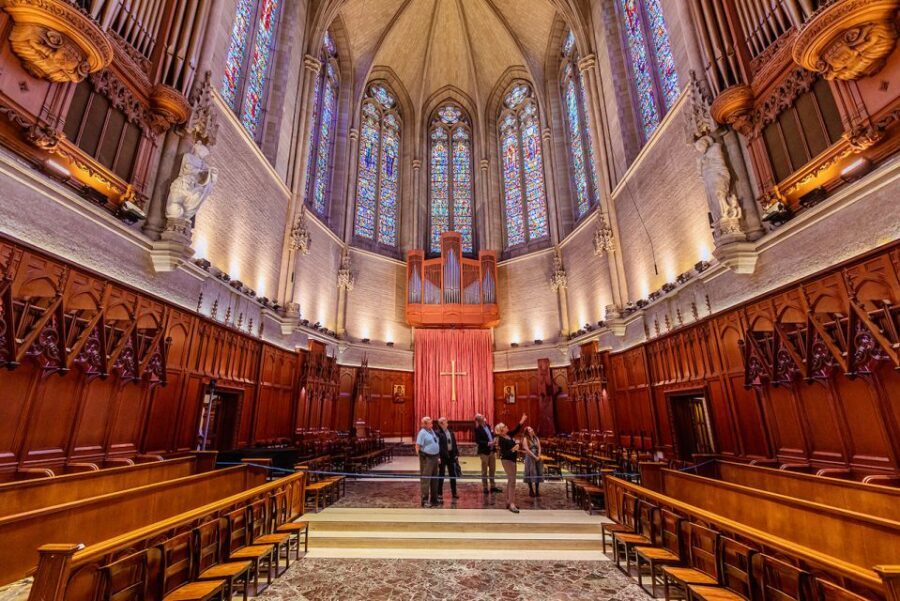
- Gothic architecture that feels dramatic even before you reach the main nave
- Stained glass that changes the mood as you walk past it
- Two labyrinths, with time built in to walk one
- Interfaith AIDS Chapel, mixing faith, history, and social justice
- Ghiberti doors that pull you in even if you’re not a door-nerd
- 14 interactive displays available in English, Spanish, Chinese, and Korean
Grace Cathedral on Nob Hill: What You’re Really Walking Into
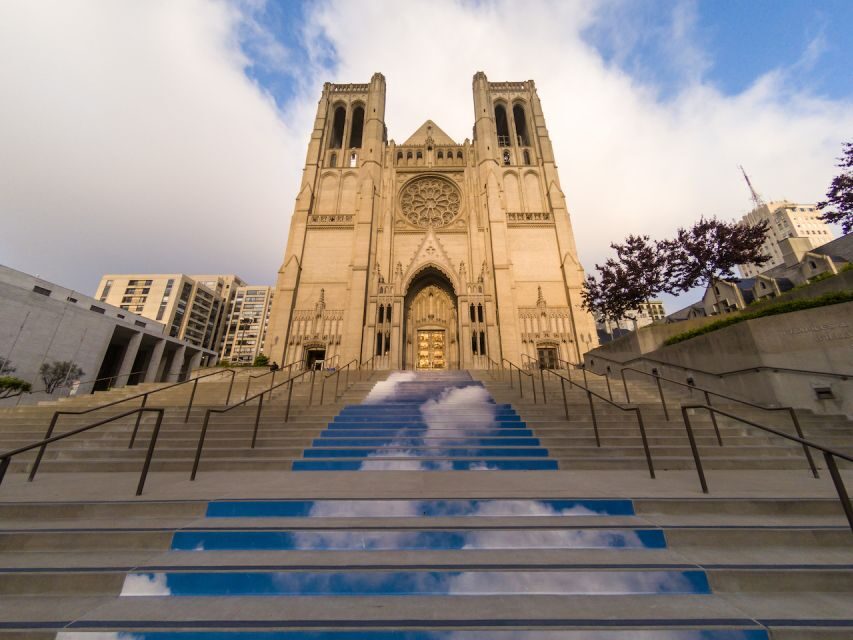
Grace Cathedral sits up on Nob Hill, and the approach is part of the show. You’ll find it best accessed via the big steps on Taylor Street, which means you arrive already walking uphill, already in “this is a landmark” mode. The cathedral itself is an Episcopal church, and it has that old-meets-very-specific vibe: Gothic, but also intentionally welcoming.
What I like about Grace is that it doesn’t treat itself like a museum you only look at. Even though it’s open for visitors, the place still reads as a living religious space—so your visit feels quieter, more reflective, and a bit more personal than a checklist stop.
The ticket gives you entry plus a self-led route. In about an hour, you can see the big visual hits and still leave time to actually do one of the labyrinth walks instead of just staring at it from the sidelines.
You can also read our reviews of more tours and experiences in San Francisco.



The self-guided tour hour: how to make it feel like more than entry
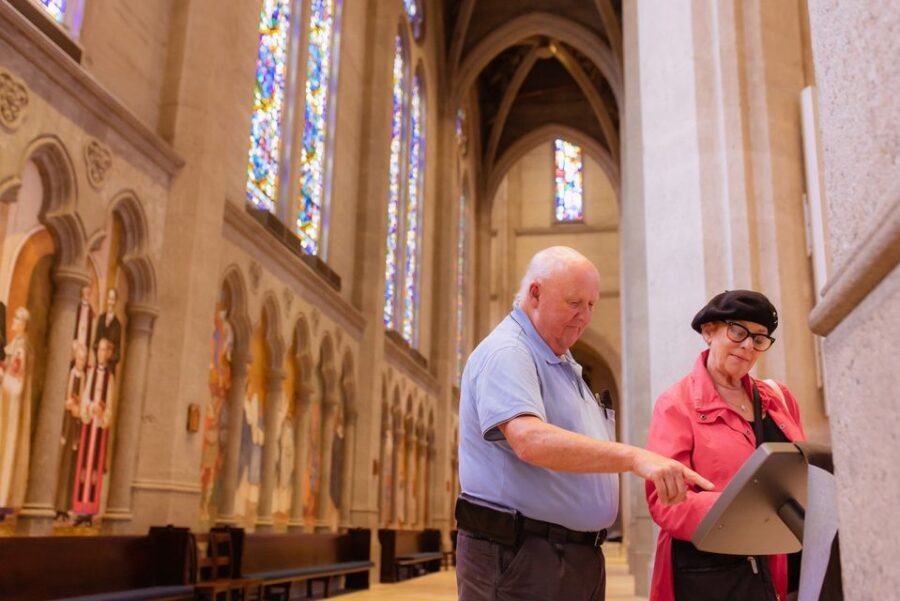
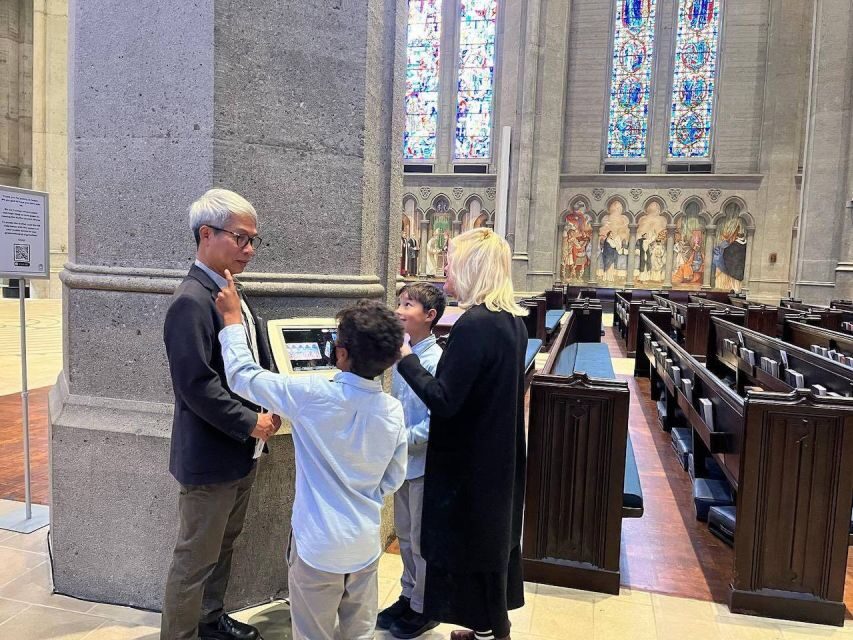
This isn’t a timed group tour with a script and a microphone. Your admission includes an interactive self-guided tour, designed so you can move at your own pace. The plan is built around the cathedral’s key spaces and artworks, supported by 14 interactive displays.
You’ll get the content in multiple languages—English, Spanish, Chinese, and Korean. If you prefer to go at your own speed, this setup works well. If you’re the kind of visitor who reads everything quickly and then wonders what you just rushed through, slow down right away. The cathedral’s main power comes from seeing how elements relate: stained glass to light, architecture to acoustics, labyrinth to meaning.
You should also expect this to end where you started, back at the meeting point. That matters because you can structure your time without worrying about transit or a second location. You’re simply wandering inside Grace until you finish your route.
And if you’re visiting with kids (ages 11 and younger need an adult), there’s a children’s map that works like a treasure hunt through the cathedral. That’s a practical way to keep little ones engaged without turning the visit into a debate about what matters.
Gothic highlights: stained glass, organ, and the labyrinths
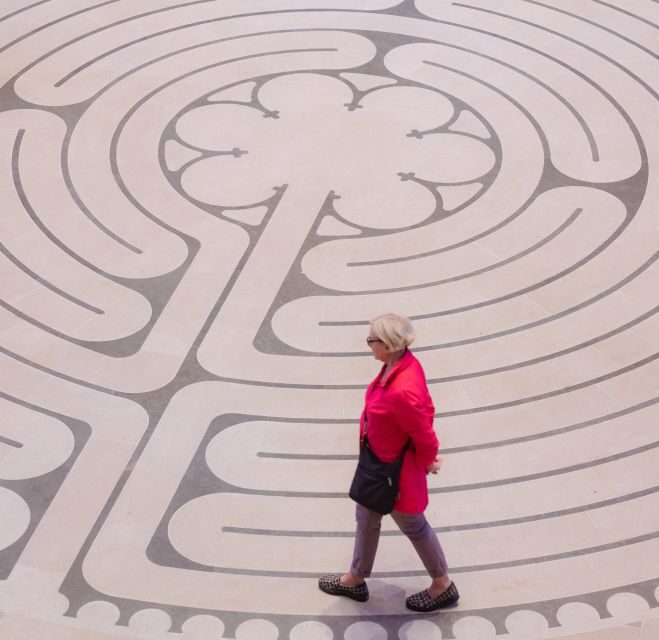
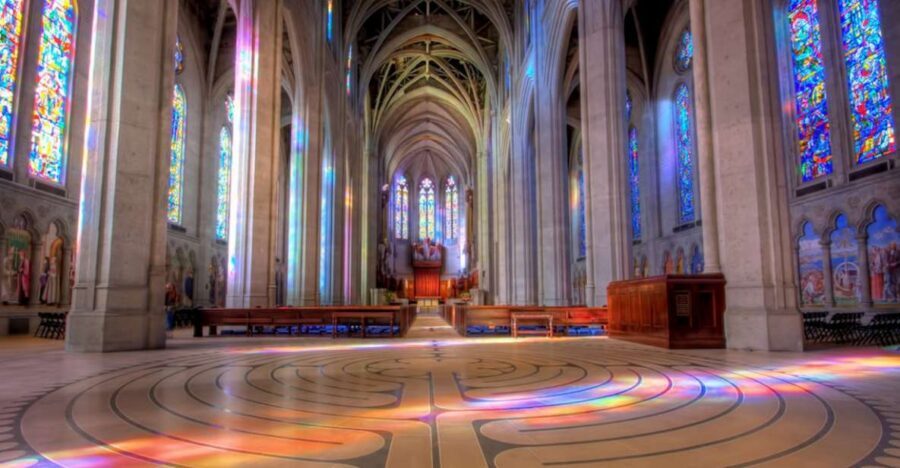
Grace Cathedral is famous worldwide for a few signature elements, and they’re the core of your visit.
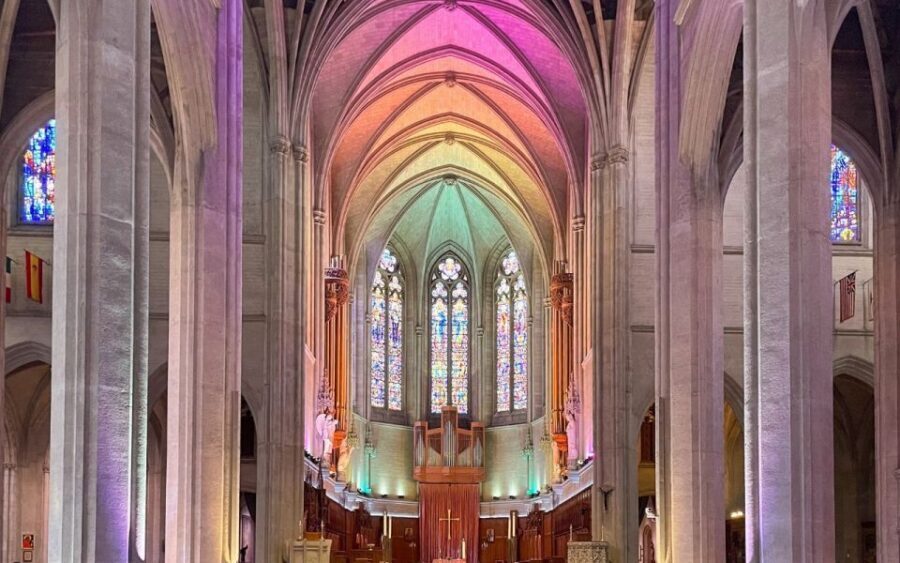
Start with the stained glass. Even if you don’t consider yourself an art person, the stained glass here lands because it’s tied to the building’s Gothic form. You’re not looking at stained glass in isolation—you’re seeing it as part of a whole interior design, with light doing the heavy lifting. Plan a few pauses. Give your eyes time to adjust as you move from brighter to darker areas.
Then, look for the Aeolian-Skinner pipe organ. You might not hear a performance during a normal visit, but just knowing it’s there changes how you read the space. A cathedral like this is designed for sound—whether that sound is organ music, spoken prayers, or just the way footsteps echo.
Now for the part people often rush: the labyrinths. Grace has two labyrinths, and the visit is designed so you can walk one to finish. Don’t treat it like a photo stop. Walk it. A labyrinth is meant to slow you down and give your mind something structured to do without needing to figure out complicated rules. If you go in thinking you’ll just “walk around,” you’ll miss why it feels meaningful.
A practical note: no flash photography is allowed. So if you’re hoping for crisp pictures, adjust your expectations. Use steady light and take fewer, better shots instead of trying to force a bright flash.
Ghiberti doors and the Interfaith AIDS Chapel
The Ghiberti doors are one of the big visual draws. Doors can sound like a minor detail, but at Grace, they’re treated like an artwork moment—something you can’t help noticing because they’re literally the boundary between the outside world and the cathedral interior.
After you take those in, shift your attention to the Interfaith AIDS Chapel. This isn’t just a side room. It’s part of Grace’s identity, tied to social justice and compassion. Standing inside a space like that, you feel how the cathedral connects belief to action. It’s the kind of place where the message is built into the setting, not just explained in text.
What you should watch for is how this chapel fits into the rest of the cathedral. You’re not moving through random rooms; you’re moving through ideas—faith, community, suffering, care. That’s why the cathedral is described as inclusive. It doesn’t only welcome people who already share the same background. It welcomes people who need a place to think and to feel safe.
If you’re short on time, don’t skip this. It’s one of the strongest stops for meaning, even if you’re mostly there for architecture.
Religious and secular art: Keith Haring, David LaChappelle, and Ansel Adams
One reason Grace Cathedral can be interesting even for people who usually skip churches is that it doesn’t keep its art strictly inside a single category. You’ll see religious and secular works, including pieces by major artists such as Keith Haring, David LaChappelle, and Ansel Adams, among others.
Here’s the value for you: the cathedral becomes a meeting point between spiritual themes and modern culture. You’re not just touring a traditional sanctuary. You’re seeing how the cathedral frames art as communication—sometimes loud, sometimes contemplative, always meant to connect.
For example, with a place like Grace, street-art-adjacent work can feel surprisingly compatible with stained glass. Both use bold design and intentional symbolism. And with photography by Ansel Adams, the cathedral setting changes the meaning of images—suddenly the photography feels less like “a picture” and more like a way of looking at the world through light.
Take your time here. This section can easily turn into a scan-and-snap mission if you’re not careful. Instead, pick two or three artworks to actually stand with. Let the cathedral’s environment do its job.






San Francisco history you can actually point to
Grace Cathedral isn’t just a pretty interior. It ties itself to San Francisco’s story, and the self-guided experience is meant to connect what you see with how the city got shaped.
You’ll learn about church history and architecture, plus bigger local history such as the 1906 fire and the founding of the United Nations. That combo sounds broad, but inside the cathedral it makes sense: a landmark church isn’t isolated from city events. It becomes part of how people rebuild, remember, and plan for the future.
The cathedral’s own social justice initiatives are also part of what’s explained in the tour. And the inclusivity theme isn’t just marketing. You feel it in spaces like the AIDS Chapel and in the way religious and secular art share space under the same roof.
If you like travel that gives you context you can point to—something more than “this is old”—you’ll appreciate this. Grace Cathedral helps you read the city as something layered, not just scenic.
Where to enter and how the accessible route works
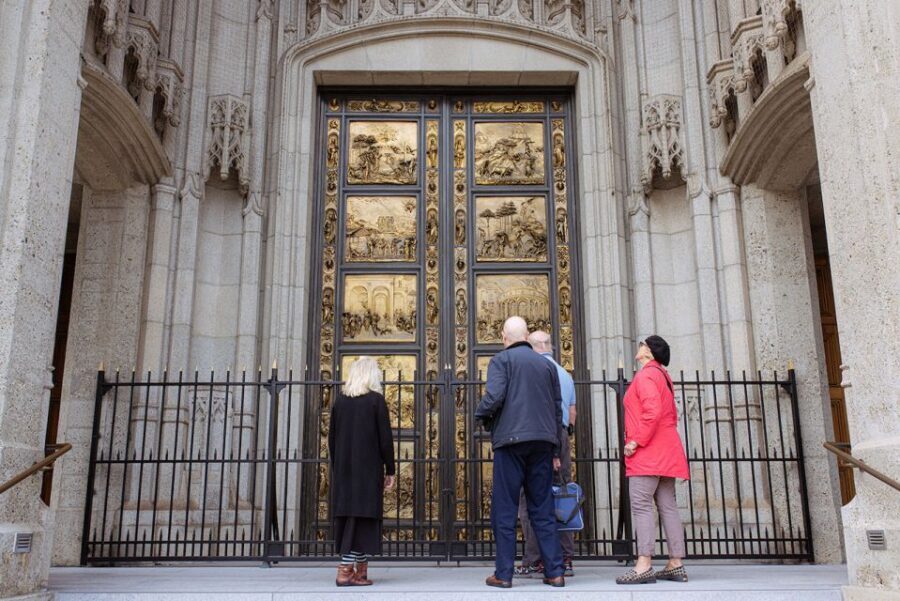
You’ll want to arrive knowing the main access points so you don’t waste your hour hunting.
The accessible entrance is on Taylor Street. Just north of the great steps, enter through the double glass doors at 1051 Taylor Street. Once you’re inside, turn left and go down the hall. Keep going past the restrooms, then turn right and continue until you reach the elevator on your right. Take the elevator to the main floor by selecting floor 1.
If you’re using parking, the Grace Cathedral Garage is also on Taylor Street and uses the same accessible entrance. Follow the signs to the cathedral.
Wheelchair access is specifically supported, and the activity is wheelchair accessible. So if you’re planning your route around mobility needs, you can expect the cathedral’s main level access to be handled with that elevator connection in mind.
Also remember: Flash photography isn’t allowed, so plan for lower-light photography and patience.
Price and value: is $14 worth your time?
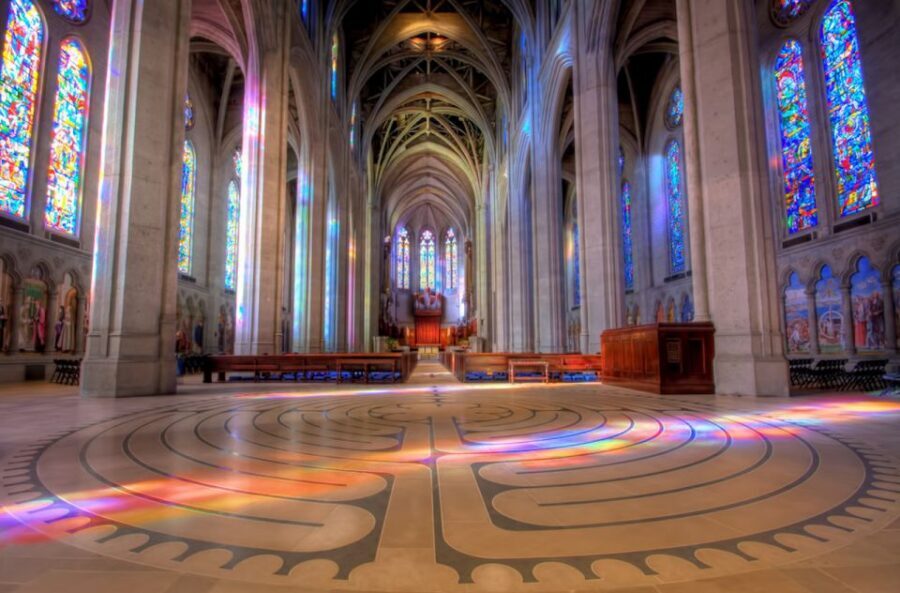
The ticket price is $14 per person, and the visit is designed for about one hour. For a major landmark in a top tourist city, this price feels straightforward: you’re paying for entry to a working cathedral plus an interactive route that points you to the key sights.
The value shows up in a few ways:
- You get self-guided freedom, not a strict schedule. If you like to pause, you can.
- You get multi-language interactive content, including English, Spanish, Chinese, and Korean.
- You can do the full set of signature experiences—stained glass, labyrinth walking, and major art—without needing a tour group.
If you’re the kind of visitor who likes structure, this may be the sweet spot: the displays give guidance, but you keep control of pace. If you want a live guide explaining architecture and history out loud, $14 won’t feel like it covers that. But for independent travelers, families with kids, and anyone who enjoys walking slowly through meaningful spaces, the cost-to-experience ratio is solid.
Who should book this ticket?
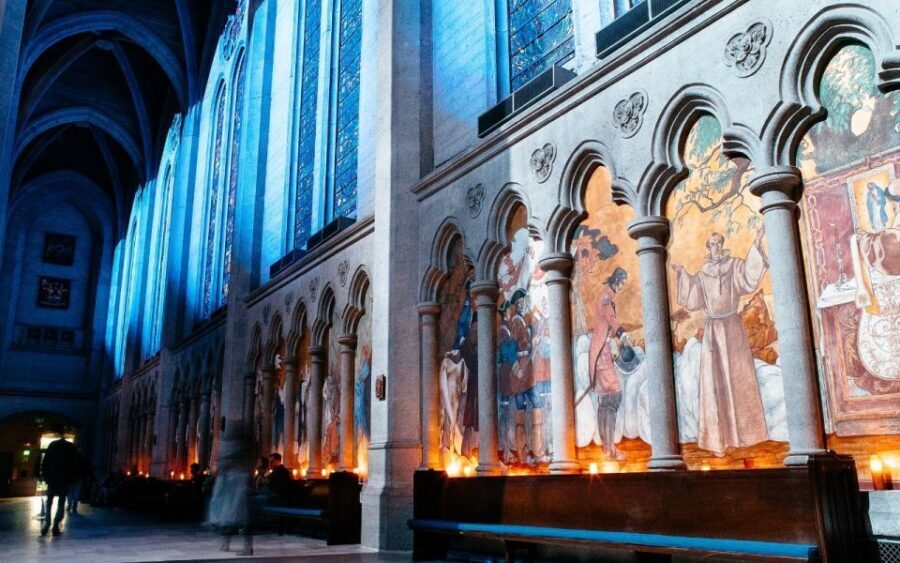
This experience fits well if you:
- want a classic San Francisco icon that also feels personal
- enjoy architecture and art but don’t need a lecture
- like reflective stops (the labyrinth walk helps with that)
- are visiting with kids and need a way to keep them engaged (children’s map treasure hunt)
It may be less ideal if you:
- want a spoken, guided narrative instead of reading interactive displays
- plan to rely heavily on flash photography for images (it’s not allowed)
- prefer fast, high-energy sights with minimal walking or focus time
Should you book Grace Cathedral entry?
I think you should book it if you want a calm, art-and-meaning stop in the middle of San Francisco’s busy rhythm. For $14 and about an hour, you can see the cathedral’s big visual signatures—stained glass, labyrinths, the Aeolian-Skinner organ presence, and the Ghiberti doors—then add depth through the Interfaith AIDS Chapel and the mix of religious and secular artwork.
Skip it only if you strongly prefer guided storytelling and you don’t want to read interactive displays as you go. Otherwise, Grace Cathedral is the kind of place that rewards patience, and that’s the best travel skill you can bring.
FAQ
How long does the Grace Cathedral entry and self-guided visit take?
The experience is listed as about 1 hour.
What is included with the ticket?
Your admission includes entry to explore the cathedral and an interactive self-guided tour.
Is the self-guided tour available in multiple languages?
Yes. The interactive displays are available in English, Spanish, Chinese, and Korean.
Are there children’s activities?
Yes. There’s a children’s map designed as a fun treasure hunt through the cathedral. Ages 11 and younger must be accompanied by an adult.
Where is the cathedral entrance and meeting point?
The accessible entrance is at 1051 Taylor Street, just north of the great steps. You enter through the double glass doors.
Is the cathedral wheelchair accessible?
Yes. The activity is listed as wheelchair accessible, and an elevator route is provided once you enter through the accessible entrance.
What are the key highlights inside the cathedral?
You can explore the stained glass, labyrinths, Aeolian-Skinner pipe organ, Ghiberti doors, the Interfaith AIDS Chapel, and religious and secular art including works by Keith Haring, David LaChappelle, and Ansel Adams.
Can I take photos with a flash?
No. Flash photography is not allowed.
Is Grace Cathedral a church?
Yes. Grace Cathedral is an Episcopal church.
Does the ticket support the cathedral’s mission?
Yes. Your admission fee supports Grace’s inclusive mission to welcome all.