REVIEW · SAN FRANCISCO
Beginner Surf Lessons At Stinson Beach
Book on Viator →Operated by Marin Outdoor Adventure · Bookable on Viator
Stinson Beach makes first rides feel possible. A two-hour beginner lesson at Stinson Beach gives you clear coaching on the basics, from ocean safety to how to stand and ride, all in a spot that’s famous for making the Bay Area feel bigger.
I especially like the mix of beach instruction and real water time, so you practice what you learn instead of only listening. The drive to Stinson Beach is part of the appeal too, with an easy day trip feel from San Francisco.
I also appreciate the hands-on teaching style I saw firsthand from instructor Cecelia, who guided step by step and kept you moving through each part of the lesson. You spend time learning wave dynamics and surfing etiquette, not just standing on a board and hoping for the best.
One thing to consider: the lesson price covers surf instruction only, and equipment rental costs extra (often in the $15–$50 range). Also, the class needs a 3-participant minimum and runs only in good weather, so there’s a small chance you’ll get moved or refunded.
In This Review
- Key things to know
- Stinson Beach: the beginner-friendly setting and the scenic drive
- Price and value: what $100 covers (and what it doesn’t)
- The 10:00 am two-hour lesson: what happens from meet-up to back again
- Getting oriented on the sand
- Moving into the water
- Ocean safety and wave smarts you’ll use immediately
- From paddling to pop-ups: getting your body into the right positions
- A practical way to frame the goal
- Stand-up and riding basics: learning technique without feeling lost
- Surf instruction with small-group limits: max 10, minimum 3
- Equipment rental reality: plan for the $15–$50 add-on
- Weather, timing, and comfort for a morning session
- Should you book this Stinson Beach beginner surf lesson?
- FAQ
- What time does the beginner surf lesson start?
- How long is the lesson?
- What do I learn during the session?
- Is surf equipment included in the price?
- Where is the meeting point?
- How big is the group?
- What happens if weather is bad or the minimum isn’t met?
Key things to know
- Stinson Beach is the starting point. You learn on a popular Northern California beach designed for early progress.
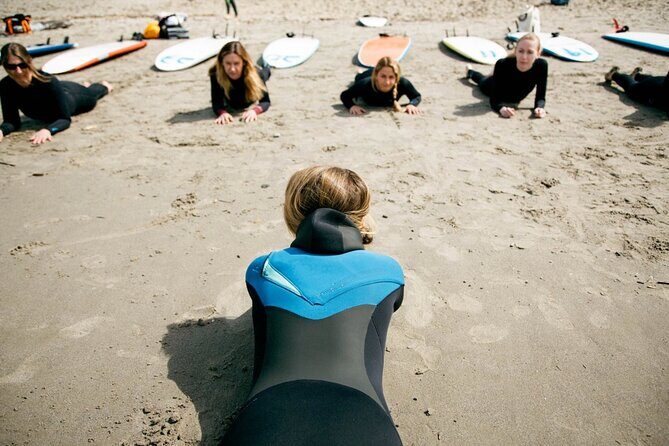
- Beach-to-water teaching. You practice pop-ups and board position on land, then get pushed into waves with coaching.
- Cecelia-style, hands-on guidance. You get active help as your skills develop during the session.
- Ocean safety is a big part of the lesson. You learn how to read conditions and choose waves safely.
- Equipment is extra. Expect to budget for board and wetsuit rental if you don’t already have it.
- Small group format. The activity caps at 10 people and requires at least 3.
Stinson Beach: the beginner-friendly setting and the scenic drive
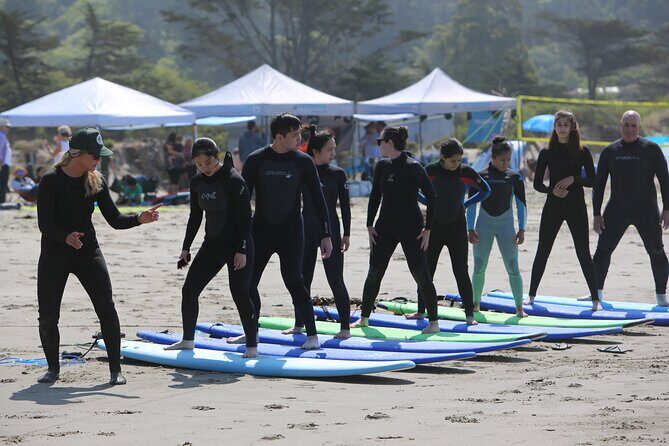
Stinson Beach is a smart choice for a first surf lesson because it’s built for the kind of learning where you want your attention split between the instructor and what’s happening on the water. You’re not trying to figure everything out alone, and the lesson structure supports that: start on the beach, then get in the water once you have the basics.
I also like that Stinson Beach is reachable as a simple Bay Area day trip. The beach is about a one-hour drive from San Francisco, so you get out of the city without needing a full travel day. For many people, that matters more than they expect. When your first surf class is only a short drive away, you arrive calmer, warmer, and better ready to learn.
And yes, the location is part of the value. You’re spending your two hours at one of the region’s most popular surf beaches, so your lesson comes with real scenery and a sense that you’re actually doing something special—not just ticking a box.
You can also read our reviews of more tours and experiences in San Francisco



Price and value: what $100 covers (and what it doesn’t)
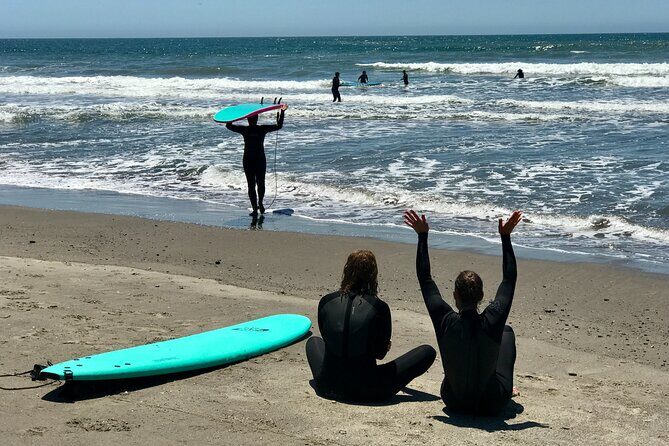
At $100 per person, you’re paying for instruction: the coaching, the safety teaching, and the active guidance while you practice. That’s important because beginner surfing is not just about having a board—it’s about having feedback at the exact moment you’re trying to do something new.
What’s not included is equipment rental. Surfboard and wetsuit rental run about $15–$50 (depending on what you need and what’s available). The instructor helps with rentals, but you should still plan on paying for them separately.
So here’s the honest value equation you should use: you’re paying for two things that matter early on—hands-on coaching and time in the water. If you already have gear and experience, the added benefit is smaller. If you’re starting from scratch, this price makes more sense because it reduces your guesswork and gives you a guided path through the basics.
The 10:00 am two-hour lesson: what happens from meet-up to back again
The experience starts at 10:00 am at Stinson Beach Surf & Kayak, 3605 CA-1, Stinson Beach, CA 94970. The activity ends back at the same meeting point, which makes the schedule feel simple.
In a typical session, you’ll follow a clear progression:
Getting oriented on the sand
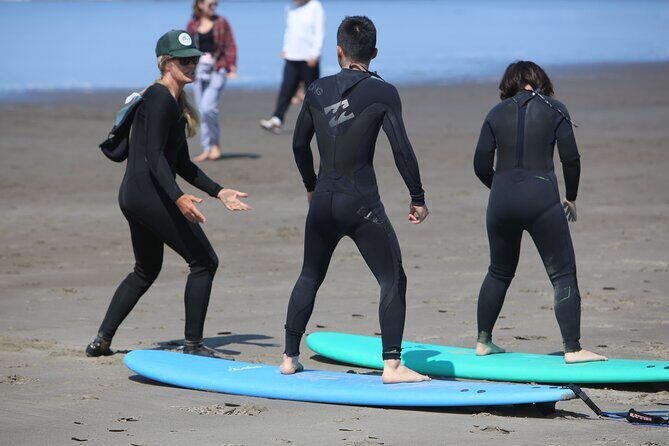
The lesson begins on the beach with ocean safety and setup basics. You’ll go over ocean safety, board position, and how to practice different styles of pop-ups. That beach time matters because it’s where you can make mistakes without the water punishing you for them.
You also get help thinking about wave dynamics—how conditions change and what that means for your attempt to catch a wave. This is the kind of instruction that prevents a common beginner problem: mistaking luck for technique.
Moving into the water
After the beach portion, you head into the water for the remainder of the lesson. The coaches are active throughout: helping push you into waves and coaching based on your skills.
For you, the key part is that you’re not left to figure out the timing alone. The lesson is built around repeated attempts, with real-time coaching.






Ocean safety and wave smarts you’ll use immediately
Beginner surf lessons can sometimes feel like a crash course in standing up. This one goes further by treating safety as part of the core skill set.
You’ll learn water safety and surf fundamentals like wave dynamics and ocean safety checks. The instructors also help with wave selection, meaning you should get guidance on when a wave is worth trying and when it’s better to wait.
That wave-selection piece is more valuable than it sounds. When you’re new, you often struggle with two things at once: paddling strength and reading conditions. Coaching here reduces frustration and also helps you avoid the risky approach of chasing every wave that comes by.
You’ll also cover surfing etiquette. That usually means learning how to share the water better and follow basic rules of spacing and awareness—important when multiple people are practicing in a similar area.
From paddling to pop-ups: getting your body into the right positions
The beach portion focuses on your setup—especially surfboard positioning and the pop-up motion. Practicing pop-ups on land is how you get your muscle memory closer to correct before you’re balancing on a moving board.
Then in the water, the coaching continues with paddling skills and the transition to standing. Coaches help push you into waves, which matters because pushing support reduces the effort needed to time your entry. You still have to do the work, but the lesson is designed so you can focus on technique instead of fighting the start of the attempt.
When instructors coach based on your skill level, you get slightly different guidance depending on what you’re struggling with: some people need help with positioning, others need help with speed and timing on the way in.
A practical way to frame the goal
If you go in expecting to ride far distances right away, you may feel stalled. A smarter goal for your first lesson is this: get comfortable with paddling, practice a clean pop-up, and learn how to balance during the first short rides. That’s exactly the kind of progress this format supports.
Stand-up and riding basics: learning technique without feeling lost
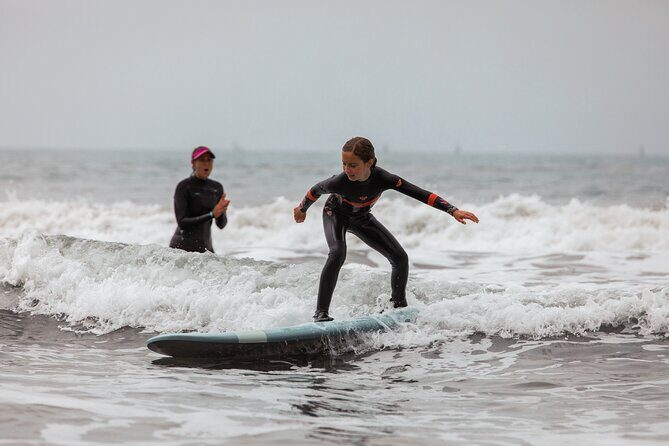
The overview includes stand-up and riding techniques, and the session structure supports that. You’re taught how to move from prone (on your board) to your feet, then how to keep your balance as the wave carries you.
Instructors coaching while you’re in the water is what turns this from a demo into a real learning session. Beginners often learn faster when someone is correcting the specific part of your motion that is breaking down.
Based on what I see people gaining from this kind of class, your most immediate wins usually come from two places:
- Repeated practice attempts while the coach adjusts your technique
- Wave selection guidance so you’re trying waves that match your ability level
Also, because the coaches push you into waves, you should spend more time actually trying to stand and ride, instead of only struggling through the paddling setup.
Surf instruction with small-group limits: max 10, minimum 3
This is a group lesson with a maximum of 10 travelers, which is a strong number for beginner coaching. You’re not in a huge crowd, and instructors can still move actively and pay attention.
There’s also a 3 participant minimum. If that minimum isn’t met, the provider will notify you with 24-hour notice and you receive a full refund. In other words, you’re not stuck in limbo indefinitely—but you should still be ready for weather and group-size changes.
If you’re coming with a friend, small-group coaching can feel extra satisfying. You get your own attempts and feedback, but you’re also part of a shared learning moment on the water.
Equipment rental reality: plan for the $15–$50 add-on
Equipment rental costs extra, and that’s the main budget item beyond the $100 lesson price. The instructor assists with surfboard and wetsuit rental, which is helpful because renting the right setup can be confusing when you’re brand new.
Because the rental range is $15–$50, you’ll want to plan a little margin so the total doesn’t surprise you. If you show up without gear, this lesson still works—just know you’re paying for the board and wetsuit separately.
This also affects value. If you already own a wetsuit and appropriate surfboard for beginner conditions, your total outlay drops. If you don’t, the lesson becomes more expensive overall, but you gain the convenience and guidance of renting through the instructor.
Weather, timing, and comfort for a morning session
The experience requires good weather. That means the provider can adjust dates if conditions are poor, and you should treat a surf day as a weather-dependent activity.
Since the class starts at 10:00 am, your best move is to arrive ready to go—so you’re not wasting time on last-minute scrambling. A morning start is often helpful because you can focus on learning rather than thinking about the day turning into a long heat-and-wait scenario.
Even with a great instructor, conditions matter. If the water is rougher than expected, your attempts and coaching may still happen, but the “beginner-friendly” quality depends on what day you get.
Should you book this Stinson Beach beginner surf lesson?
I think you should book this if you want beginner coaching that mixes safety, technique, and active help—especially if you’re starting with zero surf experience. The beach-to-water flow is practical, and the small-group cap of 10 helps keep attention on what you’re doing.
I’d skip it or reconsider if budget is tight after adding rentals, since the instruction alone is $100 and gear can cost $15–$50 extra. And if your schedule can’t handle a weather-based change, keep in mind it’s a good-weather activity with group minimum rules.
If your goal is to learn the basics fast—how to handle the board, how to pop up, and how to read waves safely—this is a solid way to do it in a classic place near San Francisco. Bonus: you also get that scenic drive and a real day-out feel.
FAQ
What time does the beginner surf lesson start?
The lesson starts at 10:00 am.
How long is the lesson?
The lesson runs for about 2 hours.
What do I learn during the session?
You’ll be taught surf basics including water safety, wave dynamics, paddling skills, surfboard positioning, stand-up and riding techniques, and surfing etiquette.
Is surf equipment included in the price?
No. Surf instruction is included, but surfboard and wetsuit rental costs extra, typically in the $15–$50 range. The instructor assists with rentals.
Where is the meeting point?
You meet at Stinson Beach Surf & Kayak, 3605 CA-1, Stinson Beach, CA 94970, USA. The tour ends back at the meeting point.
How big is the group?
The activity has a maximum of 10 participants. It also requires a minimum of 3 participants.
What happens if weather is bad or the minimum isn’t met?
The experience requires good weather. If it’s canceled due to poor weather, you’ll be offered a different date or a full refund. If the minimum number of participants isn’t met, you’ll be notified with 24 hour notice and receive a full refund. Free cancellation is available up to 24 hours in advance for a full refund.